Empowering Professionals at Every Stage
Portrait offers strategic expertise to help you make informed decisions and achieve long-term success.
Book Intro CallIf you're not tracking what you pay for dermal fillers compared to what you charge, you're probably missing out on profits. In 2026, strong demand for fillers, tighter regulations, and higher supply costs all impact your bottom line. Let's dive into what really drives filler pricing now, the top brands, and how you can create pricing that boosts your revenue without leaving money behind.
Fillers are at the center of most injectable menus. Margins can be solid, and patients come back for more. But if you aren’t watching your costs or the market, it's easy to let profitability slip. This guide breaks it all down in simple terms you can act on today.
Understanding Dermal Filler Prices in 2026
The filler market is exploding. Global projections put dermal fillers at $9.79 billion in 2026. The U.S. brings in a big part of that. The med spa market topped $21.5 billion in 2025, and non-invasive procedures now make up more than half of all aesthetic medicine revenue.
Patient demand is shifting. Younger clients start earlier with preventative treatments. More men are coming in and some practices see up to 50% male patients. The "natural look" trend means patients want top-level injectors, not just a bargain. With that, you can build value-based pricing, not price on who’s cheapest.
The FDA got tougher with fillers in 2026. There are new safety protocols, more required reporting, and stricter training rules. OSHA raised sanitation standards last year too. Those compliance costs are real. Don't ignore them when setting your prices, or you'll eat into your profits without realizing it.
Key Factors Affecting Dermal Filler Prices for Med Spas
Every practice prices fillers a bit differently, but certain factors pop up for everyone.
- Location counts. In big cities like New York, L.A., or Chicago, fillers run $900–$1,200 per syringe. In suburbs like Phoenix or Las Vegas, it's $450–$950. Know what your market will bear.
- Your injector’s credentials set the bar. Board-certified providers and seasoned nurse injectors charge more. If you're investing in training, make sure your pricing reflects those skills.
- Overhead isn't optional. Rent, utilities, insurance, payroll, and compliance all need covering. For most clinics, cost of goods sold should be 15%–35% of total revenue, with injectables at the higher end.
- Brand choice shifts your costs. Premium fillers cost more, but you’ll likely charge more for them. If your wholesale prices rise and you don’t update your fees, your margin disappears quickly.
Leading Filler Brands and Their Use Cases
Knowing what each filler brand does helps you build a simple menu that fits many patient needs without bloating your inventory.
- Hyaluronic acid fillers lead the market, with 64% of global share in 2026. They’re reversible, have a strong safety profile, and work for lots of concerns. Key brands:
- Juvéderm (AbbVie/Allergan): Handles everything from moderate wrinkles to cheek and lip injections. The full line is widely recognized and trusted.
- Restylane (Galderma): Covers many facial zones with specialized formulas. Restylane uses NASHA and XpresHAn tech to get consistent results.
- RHA Collection (Revance): The only FDA-approved HA filler for highly dynamic facial areas, so it moves naturally with expressions.
- Revanesse (Prollenium): Smooth HA gel that blends right in. Covers lips, nasolabial folds, and midface volume. Retails for $500–$700 per syringe, costs $240–$350 wholesale so the margins are healthy.
- Biostimulators trigger new collagen instead of direct volume. Main options:
- Sculptra (Galderma): Uses poly-L-lactic acid. Results last over two years as collagen builds.
- Radiesse (Merz): Calcium hydroxylapatite spheres for instant lift plus collagen growth, lasting 12–18 months.
- Profhilo (IBSA Derma): Sits between a skin booster and typical filler. Improves firmness and hydration. Sessions usually cost $500–$700.
Economic and Market Trends Shaping the 2026 Landscape
There are a few big trends shaping filler pricing right now.
- The "natural look" is in and it sells. Allergan Aesthetics calls it the "Undetectable Era" for HA fillers. Patients want to look like themselves, just refreshed. Skilled injectors can and should charge for that expertise.
- GLP-1 drugs like Ozempic or Wegovy create a new demand. Fast weight loss leads to facial volume loss, so "GLP-1 facial restoration" is now a sought-after service line. These patients are already in the healthcare loop and need regular volume replacement.
- Tariffs are spiking import prices on devices and fillers. If your supplier raised prices, it's not just you. Take it as a sign to review what you charge and who you buy from.
- Even with a shaky economy, demand stays steady. Nearly half of filler patients say they’ll continue even in a recession. Only a third say they’d switch to cheaper products. Fillers keep cash flowing.
Pricing Packages and Promotional Strategies
Pricing by the syringe works, but memberships and packages give you bigger, steady revenue.
- Bundles raise your average ticket. Full-face packages using three syringes often run $1,900–$2,300, depending on your area. Lip and chin combo packages are usually $1,100–$1,350. They make the value obvious to patients and boost per-visit sales.
- Memberships help you build loyalty and smooth out slow months. About 85% of U.S. med spas offer memberships. Members visit almost three times more often and spend over a third more than non-members. Done well, memberships can be 20–30% of total revenue.
- Set up tiers. Try a basic level with some treatment credits and a discount, a mid-tier that adds injectable credits and priority booking, and a top tier at $299/month with injectables, advanced care, and deep discounts. Focus on getting regular, recurring payments instead of chasing one-time sales.
- Avoid slashing prices just to fill the schedule. That hurts your brand and trains patients to wait for sales. Give value through perks instead, like free consults, points for loyalty, or referral bonuses.
Implementation Tips for Cost-Efficient Practice Management
You can't set pricing once and forget it. Update it as your costs change.
- Track profitability by treatment, not just revenue totals. Record each procedure's income and cost of goods sold. That’s the only way to spot which services are winning and which are dragging your margin down.
- Try to keep labor under 35% of revenue. If it’s higher, you’re probably undercharging or staffed too heavy. Fix whichever one stands out, but check regularly.
- Don’t let inventory expire unused. Overstocking is wasted money. Set reorder points based on usage, not just discounts from reps. Practices with inventory tracking save 15–20% easily.
- Your EHR and practice software should show you profit per service fast. If you’re still pulling reports by hand, you’re making it too hard for yourself.
Save with Portrait: Lower Supply Costs and Streamline Inventory
Sometimes the best way to boost your margins isn’t just to charge more. Cutting costs for product matters even more.
Portrait's supply marketplace hooks you up with 2,000+ complaint medical products, like injectables and wellness devices, all at pricing usually reserved for big groups. Most independent practices get the same discounts as big chains, with savings of up to 60% on select products. There are no rev share deals and no long-term contracts to lock you in.
The inventory tools are built in. When you use product for a treatment, stock counts drop automatically, and you get alerts before you run low. That means fewer fire-drill orders and way less expired product. With the Rewards program, you use part of your discount right away and bank the rest as rebate points for your next orders. It all adds up, order after order.
Portrait also combines your EHR, payments, scheduling, CRM, and inventory in one easy system. You don’t need to jump between apps or worry about losing info. For busy clinics, clear data and efficiency are just as important as savings on supply costs.
Drive Growth and Profitability This Year
The filler market is surging. Patients want procedures from clinics they trust and they’re ready to pay for quality. The winning practices keep pricing sharp, costs low, and use software to keep every dollar in view.
Dermal filler prices in 2026 reward clinics that offer skill, safety, and consistency. Make sure your prices reflect what you bring to the table. Lock down your costs. Build in recurring revenue with smart memberships. And don’t overlook software that saves you time and money.
If you're ready to cut supply costs, stop wasting inventory, and run a smoother injectable business, book a call and see what Portrait can do for your clinic this year.
Savings vary by practice, product mix, and order volume. Figures reflect select products and are not guaranteed.
Related reading
One Platform.
Everything You Need.
Everything You Need.
Portrait combines the technology, support, and savings to run and scale your modern medical wellness business.
Book Intro Call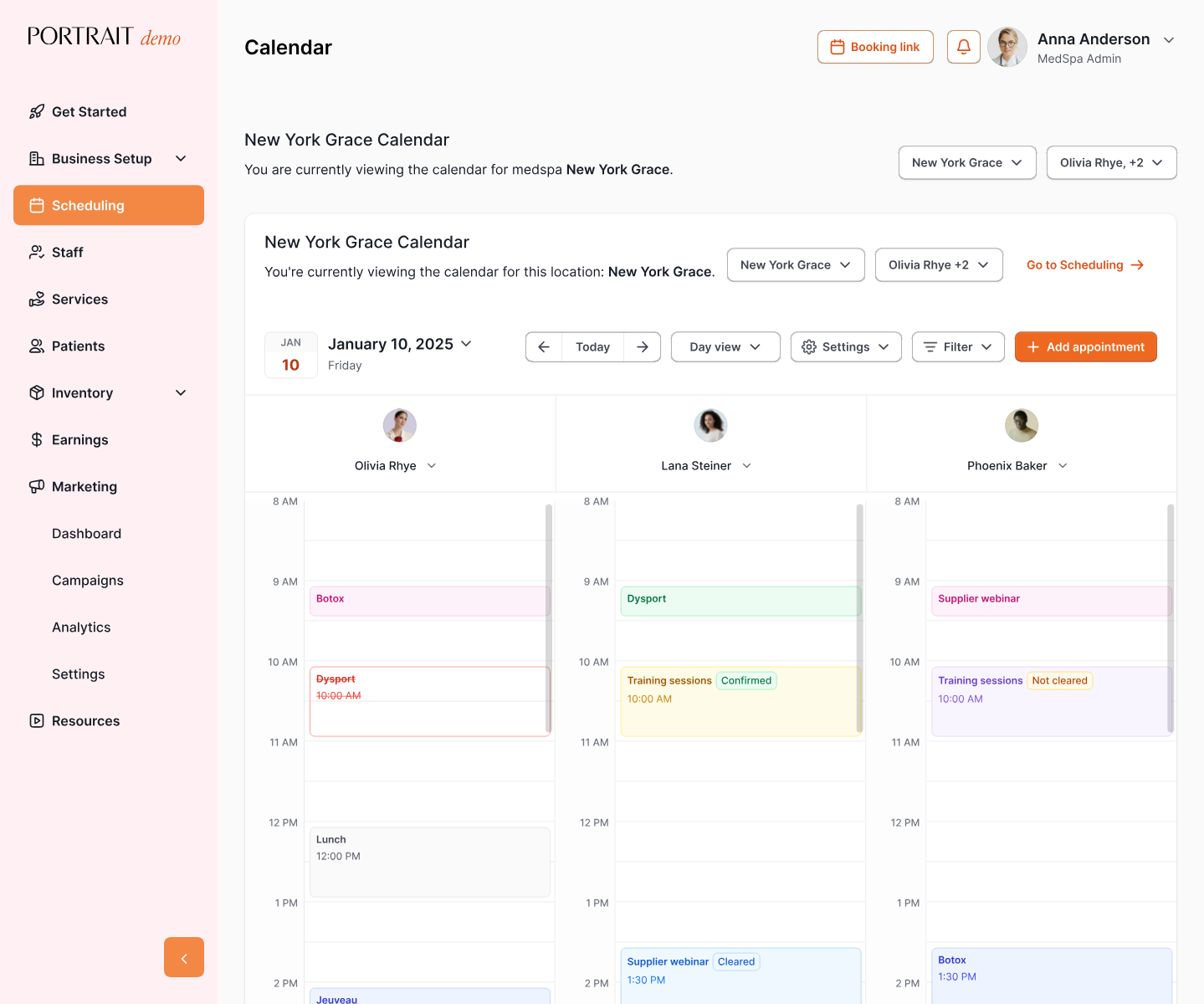


Stay Connected with Portrait Care
Subscribe to our email list and receive the latest insights, updates, and exclusive content delivered straight to your inbox.