
Empowering Professionals at Every Stage
Portrait offers strategic expertise to help you make informed decisions and achieve long-term success.
Book Intro CallWant to protect your margins on neurotoxins in 2026? Start by making smarter buying and pricing moves. Neurotoxins bring in around 28% of med spa revenue, so small mistakes quickly get expensive. More clinics are opening up, patients are shopping around more, and injectable profits are getting squeezed. This guide gives you current price comparisons, shows what’s driving costs, and explains practical steps for buying and pricing so you make money on every vial.
The neurotoxin market is huge and still growing. The global market will hit nearly $6 billion in 2026. Minimally invasive treatments jumped 79% over the last five years. Great news, but more med spas means more competition. There were about 8,900 U.S. med spas last year. Now, that’s over 10,400. By the end of 2026, it could reach 13,000. More competition usually means tougher patient acquisition and thinner margins.
Understanding the 2026 Neurotoxin Landscape
Botox is still on top, but alternatives are making moves. Jeuveau went from 4% market share in 2019 to 14% in 2025. Daxxify stands out with longer duration.
You’ll want to keep an eye on Letybo, which got FDA approval in 2024 and leads the market in South Korea, along with Relfydess, a liquid toxin that doesn’t need reconstitution and has an FDA BLA resubmission accepted in 2026. These products change what patients expect from things like onset, duration, and convenience.
Prices are more stable after 2024's inflation hit, but your clinic’s location still matters. With seven FDA-approved neuromodulators out there, what you carry and how you price it matters a lot.
Neurotoxin Price Comparison: Popular Brand Roundup
Here’s how neurotoxin prices stack up on wholesale and retail. Keep in mind actual costs depend on your buying volume, vendor deals, and loyalty programs.
Patients generally pay between $4 and $25 per unit depending on the brand and your clinic's zip code. Medical spas buy these neurotoxins wholesale for $3 to $10 per unit.
- Botox (OnabotulinumtoxinA): Patients typically pay $10 to $25 per unit for this market leader. Clinics purchase wholesale vials for $6 to $8 per unit. This translates to $400 to $600 for a standard 100-unit vial before you apply any vendor rebates or loyalty points to your order.
- Dysport (AbobotulinumtoxinA): Clinics usually purchase Dysport for a wholesale price between $1.50 and $2.50 per unit. Patients pay a lower upfront retail price of $4 to $8 per unit. Providers must inject 2.5 to 3 units to match the clinical efficacy of a single Botox unit. This exact dosing conversion makes the total treatment cost almost identical to other brands.
- Xeomin (IncobotulinumtoxinA): This naked toxin completely lacks complexing proteins. This unique formulation substantially lowers the risk of immunogenic secondary treatment failure across multiple anatomical treatment sites. You'll buy the product for $5 to $6 per unit wholesale, and patients pay $10 to $17 per unit.
- Jeuveau (PrabotulinumtoxinA): Med spas purchase this highly purified aesthetic neurotoxin for a very low $3 to $4 per unit. Patients generally pay $12 to $15 per unit. This ideal pricing spread gives you great profit margins that immediately help fund your everyday marketing and business operations.
- Daxxify (DaxibotulinumtoxinA-lanm): This long-acting neuromodulator uses a proprietary peptide excipient to extend clinical duration up to six months. You'll pay a premium wholesale price of $8 to $10 per unit to stock it. Patients pay a premium retail price of $15 to $25 per unit for the longer-lasting physiological effects.
- Letybo (LetibotulinumtoxinA): This newer formulation brings highly competitive pricing to your inventory list. Patients pay around $9 to $13 per unit to temporarily relax active facial musculature.
Botox Pricing
Botox dominates, holding over 60% of the U.S. market. Clinics usually pay $6 to $8 per unit ($400 to $600 for 100 units before rebates). Patients pay $10 to $25 per unit, but most clinics land between $12 and $16.
Patients often ask for Botox by name, so it’s easy to sell and to price at a premium. Top treatment areas include the forehead, glabella, and crow's feet. Gross margins average 50% to 70% if you price it right.
Dysport Pricing
Dysport costs less per unit than Botox, but you’ll use about 2.5 to 3 Dysport units for every 1 unit of Botox. So, treatment cost is nearly the same. Dysport has a faster onset (results show in 2 to 3 days) and a wider molecular diffusion, which creates softer, more natural results.
It works well for larger muscles like the frontalis and for patients wanting less obvious correction. It’s a solid choice alongside Botox.
Xeomin Pricing
Xeomin is Merz’s “naked toxin.” It’s double-filtered and stripped of accessory proteins, which lowers the risk of antibody resistance.
Clinical studies show Xeomin has no reported cases of immunogenic secondary treatment failure in some conditions. If you’ve got patients who’ve been on neuromodulators for years, that’s a big selling point.
Xeomin wholesale is $500 to $600 for 100 units. Patients pay $10 to $17 per unit. It matches Botox unit-for-unit in efficacy, so it’s easy to calculate margins.
Xeomin also stores at room temp before reconstitution. In 2024, Xeomin was first to get approval for all three upper face lines in one session. It’s great for patients who want extra purity or have developed resistance to other products.
Jeuveau Pricing
Jeuveau is the only neurotoxin approved just for aesthetics. Clinics typically buy at $3 to $4 per unit. Patients pay $12 to $15. It’s a favorite with younger patients, thanks to social media marketing. Evolus has solid loyalty perks, especially with Club Evolus, letting patients pay $49 a month for 20 units every 90 days, so your clinic gets steady, predictable visits.
Daxxify Pricing
Daxxify costs more at $8 to $10 per unit wholesale ($400 to $500 for 50 units) but lasts twice as long, usually six months vs. three to four months for other toxins. That changes annual spending for patients: two Daxxify treatments at $600 is $1,200 a year.
Compare that to four Botox sessions at $400 totaling $1,600. Patients save money yearly, and you can sell Daxxify as a premium, low-maintenance option. Plus, it’s the only toxin made in the U.S., so you’re not at risk from import issues or tariffs.
Factors That Influence Pricing
Your prices can’t just follow the clinic down the street. They need to cover your actual costs and hit target margins. Here’s what to watch for:
- Geography: Big cities can carry $15 to $25 per Botox unit. Rural areas usually max out at $8 to $13. California averages $18, while the Midwest is more like $12. Know your market numbers and set accordingly.
- Overhead: Solo injectors usually spend $8,000 to $12,000 each month on fixed costs. Bigger clinics can see $20,000 to $40,000 or more. Your prices have to cover this and leave profit space.
- Volume: More volume per order means lower per-unit cost. If you’re only buying a couple vials at once, you’re overpaying.
- Loyalty programs: Use Allergan’s Allē and Evolus’s Club Evolus. They help with patient retention and lower your real per-unit cost.
- Seasonal promotions: Watch for vendor deals, especially at quarter-end. Planning big orders during these promos helps drive down your supply cost.
Your injectable COGS should be 30% to 40% of sales. Payroll can’t go over 35% of revenue. An established med spa should see 15% to 25% net margin. If you’re missing those targets, adjust your pricing and purchasing first.
Efficient Purchasing Strategies and Profit Margins
If you pay $3.50 per Jeuveau unit instead of $5, you save $30 per 20-unit treatment. That’s $3,000 per month at 100 treatments or $36,000 a year. Small amounts stack up fast.
Here are a few habits to keep profits strong:
- Buy bigger quantities when you can. Vendors give discounts for larger buys.
- Work with more than one supplier. If one runs out or raises prices, you’re covered.
- Consolidate orders across locations to qualify for better manufacturer volume tiers.
- Enroll in manufacturer rebate programs and stay on top of cash-back. Allergan can return 10% to 25% based on quarterly totals.
Most clinics still use per-unit pricing for neurotoxins, but memberships are growing. If you set up a great membership, it can bring in 20% to 30% of income and get people booking on a regular schedule. With Daxxify, try selling annual packages of two treatments upfront. This brings in guaranteed revenue and shows patients clear value.
Don’t chase volume by discounting your main services. It trains patients to wait for deals and weakens your brand. If you want to reward loyalty, offer membership perks instead of slashing your prices for everyone.
Portrait's Supply Discounts: A Game-Changer for Savings
To really protect your margins, cut what you spend on supplies. Portrait's Marketplace connects independent clinics with the same deals big chains get with savings of up to 60% on select products, including neurotoxins like Botox, Dysport, Xeomin, Jeuveau, and Daxxify. You also get access to over 2,000 vetted medical products in one spot. There’s no juggling multiple suppliers or missing out on better pricing you didn’t know existed.
Inventory headaches? Portrait's software handles inventory management automatically. After each treatment, your stock count is updated. You get reorder alerts before you're out, which means no running out last-minute and no product getting wasted on the shelf. Clinics using real tracking cut waste by 15% to 20%.
If you don’t track properly, you could lose 10% to 15% of potential revenue. With the Portrait Rewards Program, half of your discount drops off your order right away, and the other half builds as cash-back points. As your quarterly spend increases, you move up tiers, unlocking bigger savings and extra benefits as you go.
Keep Thriving in 2026
The clinics winning in 2026 aren’t just the ones with the lowest prices or best marketing. They’re dialed in on their numbers, buying smart, and pricing with intent. Staying profitable means regularly checking neurotoxin costs, revisiting your pricing, and reshaping your strategy as new products hit the market.
- Review acquisition costs often.
- Check your COGS against your revenue.
- Use memberships and manufacturer programs to get predictable income.
- Get your purchasing running as smoothly as your injectors.
Start saving on your neurotoxin costs today and book your intro call with Portrait.
Related reading
One Platform.
Everything You Need.
Everything You Need.
Portrait combines the technology, support, and savings to run and scale your modern medical wellness business.
Book Intro Call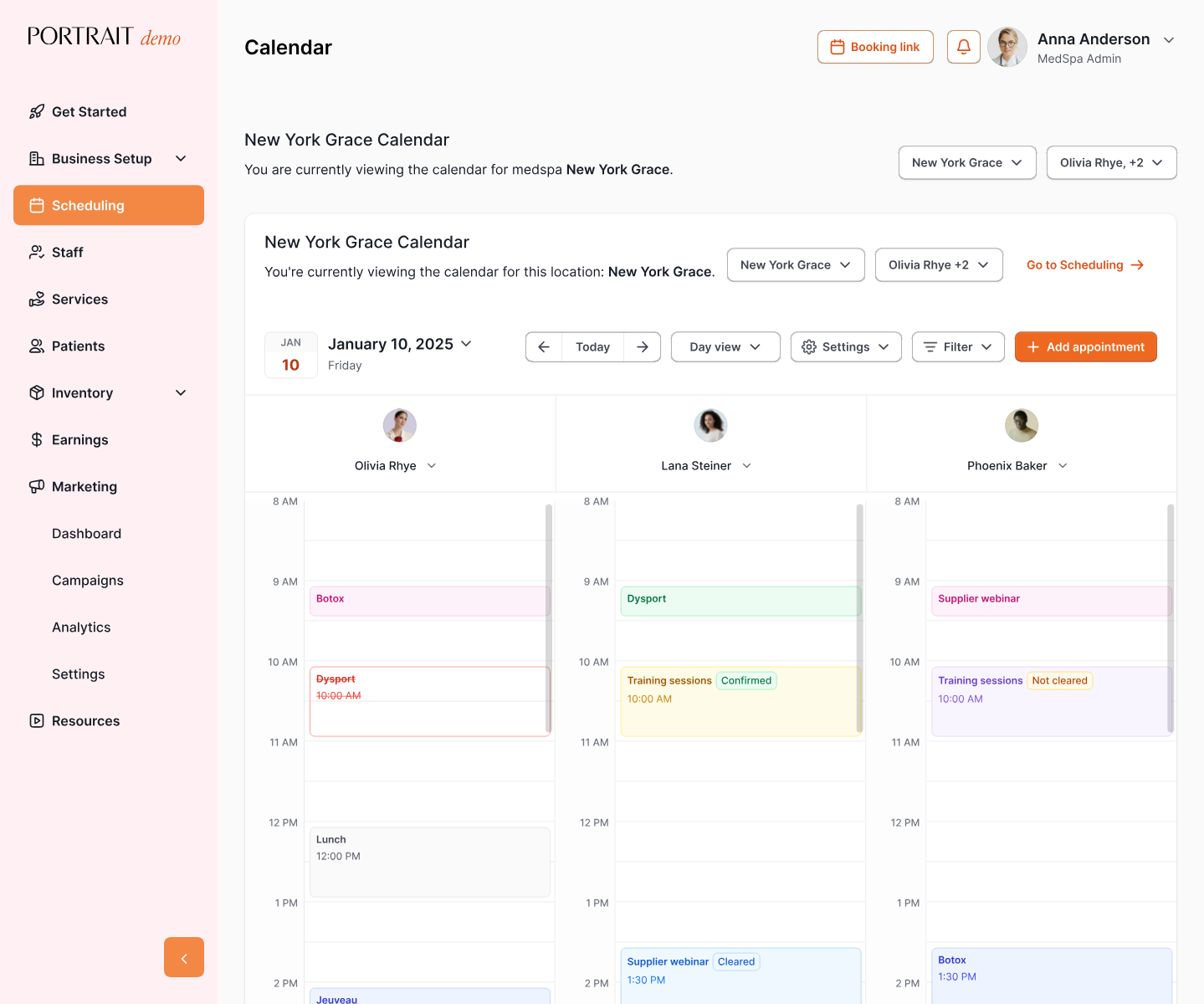


Stay Connected with Portrait Care
Subscribe to our email list and receive the latest insights, updates, and exclusive content delivered straight to your inbox.