
Empowering Professionals at Every Stage
Portrait offers strategic expertise to help you make informed decisions and achieve long-term success.
Book Intro CallIf you’re running a med spa offering GLP-1 weight loss in 2026, now’s the time to double-check everything. The FDA’s ramped up warning letters, proposed new compounded tirzepatide restrictions, and really started cracking down on telehealth and med spa clinics.
Don’t assume what worked in 2024 still works. You need to update your processes, or you’re facing real risk. This guide tells you exactly what’s changed with compounded tirzepatide, what to stop, and what to do next to stay compliant.
Tirzepatide, the active part of Mounjaro and Zepbound, sits right at the center of these new FDA changes. Because the shortage is over, there’s way less flexibility for compounding than a year or two ago. If you haven’t switched up your sourcing, prescribing, and how you talk to patients, you’re in the danger zone.
2026 FDA Compounded Tirzepatide Rules: What Med Spas Need to Know
Tirzepatide is in both Mounjaro (for type 2 diabetes) and Zepbound (weight management), both made by Eli Lilly. The rules for compounding tirzepatide got way tighter after the big 2023-2024 GLP-1 boom. The FDA shortage window is done, so the gray area’s gone.
This article is for education. It’s not a replacement for legal or medical advice. Make sure you talk to your healthcare attorney, your medical director, your pharmacy partners, and your state board about your own situation.
The Core Issue: Shortage Status Changed Everything
The FDA’s drug shortage status is important because it decides when pharmacies can legally compound versions of drugs like tirzepatide. If there’s a shortage, compounding gets more leeway. But when it ends, those special rules stop.
The FDA decided on October 2, 2024, that the tirzepatide shortage was over, and doubled down on that in December 2024. 503A pharmacies lost their enforcement discretion on February 18, 2025. 503B outsourcing facilities lost theirs on March 19, 2025. If you’ve been using compounded tirzepatide after those dates without clear clinical need, you’re already in a gray area.
Why This Matters for Aesthetic and Wellness Clinics
Plenty of med spas built up recurring revenue by offering GLP-1 weight loss while the shortage was active. With membership models, monthly shot packages, and telehealth blowing up, things grew fast.
You’ll need to rebuild those programs from the basics:
- How you source product
- How you prescribe
- How you communicate with patients
- How you document everything
This isn’t just about pharmacy. It affects intake, marketing, vendor deals, inventory, and your clinical protocols. If you want more details, check our 2026 GLP-1 compliance update.
What the FDA Has Said About Compounded Tirzepatide
The FDA’s been clear. Compounding copies of FDA-approved drugs only works in rare cases where legal requirements are met. Neither tirzepatide nor semaglutide is on the 503B Bulks List or the shortage list right now.
On April 30, 2026, the FDA said they want to ban semaglutide, tirzepatide, and liraglutide from the 503B Bulks List altogether. They found there’s no clinical need for outsourcing facilities to compound these drugs from scratch. There’s a public comment period until June 29, 2026. If they finalize this move, it slams the door on large-scale compounding.
Compounding Isn’t the Same as FDA Approval
This is key for your team and your patients. Compounded drugs aren’t FDA-approved, even if they’re made by a legit pharmacy. FDA approval checks safety, effectiveness, labeling, and quality. Compounded drugs skip those reviews.
The FDA’s said it outright: "Compounded drug products are not FDA-approved. Your claims imply that your products have been FDA-approved or otherwise evaluated for safety and effectiveness when they have not." That’s what they wrote in the 30 warning letters they sent to telehealth companies in February 2026.
Personalized Doesn’t Automatically Mean Allowed
Some pharmacies try to get around rules by mixing in vitamins or additives and calling it “personalized”. The FDA doesn’t buy it. As of fall 2025, more than 80% of compounded weight loss meds mixed tirzepatide or semaglutide with B vitamins or amino acids.
The FDA says you can’t just add extras and call it different. Real medical necessity for a specific patient needs to be documented.
Here’s the kicker: A study in March 2026 found a new tirzepatide-B12 adduct in mass-compounded tirzepatide with B12, something that’s not in FDA-approved tirzepatide. We have no idea yet if it’s safe. So, the “personalized” label won’t save you.
Top Compliance Risks for Med Spa Weight Loss
The risk is bigger than just the drugs you use. It shows up in your ads, your processes, your notes, your ordering, and your patient advice. Most clinics run into trouble here:
Risk 1: Using Vendors With Poor Documentation
- Double-check every supplier.
- Look up pharmacy licenses, if they’re 503A or 503B, and their state permissions.
- Make sure they ask for patient-specific prescriptions where needed.
- Ask for certificates of analysis every time.
- Track lot numbers, expiration dates, storage info, and which patient gets which dose.
The FDA has found fake compounded tirzepatide in the US market with pharmacies on the label that aren’t even real. Your due diligence isn’t optional—it protects you and your clinic.
Risk 2: Overblown Marketing
The FDA’s 2026 warnings called out claims like:
- "same active ingredient as Mounjaro"
- "generic Zepbound"
- Anything implying clinical trial results for a compounded product
Audit everything: your website, IG, ads, landing pages, texts, and scripts. Cut language that says your compounded products are FDA-approved, identical to brands, or guarantee results.
Risk 3: Weak Medical Oversight and Documentation
GLP-1 prescribing is real medical care. For every patient, you need:
- Full history: BMI, comorbidities, med and supplement review
- Contraindication screening, especially for medullary thyroid carcinoma or MEN-2
- Clear informed consent
State boards are watching. Contraindication screening and consent should happen the same day as the prescription. Follow up at 1, 3, 6, and 12 months, and document everything—weight, labs, dose changes, side effects. Get more details from our GLP-1 practitioner guide.
Risk 4: Messy Inventory and Dispensing
- Keep records for every dose: what you ordered, received, stored, gave, and logged
- Monitor expiration dates, fridge temps, reorder timing, and chain of custody
- If you buy from 503A pharmacies, every dose needs a patient-specific prescription
- Stocking drugs without those records is a problem an inspector will spot fast
How Med Spas Should Audit Their Tirzepatide Program in 2026
Think of this as a compliance tune-up. Check every area before you onboard new patients.
Step 1: Vet Your Vendors
Check licenses, state rules, documentation, and if their sourcing lines up with what your state and the FDA want right now. If you can’t confirm, stop ordering until you can.
Step 2: Update Patient-Facing Language
Go through your website, booking forms, ads, social media, intake forms, and consent. Make sure everything’s easy for patients to understand: med type, risks, what to expect, other options. A compliance pro should check your consent language too.
Step 3: Train Front Desk and Coordinators
- Non-clinical staff are often your first line for patient questions.
- Give them simple scripts for explaining compounded meds, brands, prices, refills, missed doses, and side effects.
- If it’s a medical question, it needs to go to the clinical staff.
- Never let non-clinical staff make medical promises or claims.
Step 4: Document Everything
- Chart full med history and clinical criteria
- Document all contraindications, consent, and why you chose a med
- Keep records of follow-ups, dose changes, and side effects
Good records protect you and your patients.
How to Talk to Patients About Compounded Tirzepatide
Patients are confused because of mixed info online and changes in telehealth programs. You need to be upfront, clear, and not too technical or defensive.
Be Simple and Build Trust
Tell patients you follow all the latest state and federal rules. You source meds through trusted channels, and everything’s for their safety. Keep it plain.
You don’t have to explain the FDA’s full regulatory process. Let patients know you offer thorough evaluations, medical oversight, reliable supply, and hands-on care.
Don’t Make Price the Big Focus
Patients do care about savings but don’t pitch cheaper compounded drugs as just as good. What sets you apart is the whole package with a complete evaluation, follow-up, guidance, and safe sourcing. That’s very different from telehealth subscription sites with little personal oversight.
Mind State Rules: Don’t Stop at Federal Guidance
FDA requirements are just the start. State medical, nursing, and pharmacy boards, as well as telehealth and corporate practice rules, all impact how you can prescribe, order, or dispense GLP-1 meds.
Boards in New York, California, Texas, and Florida have disciplined telehealth-only prescribers in weight management. Read our 2026 state regulation update to see what’s changed for telehealth, documentation, and medical director involvement in your state.
Smart Compliance Questions to Ask Your Team or Attorney
- Who can legally prescribe GLP-1 meds in our state?
- Is telehealth prescribing allowed here, and what makes a legit patient relationship?
- Can we store or dispense these meds directly, or do they have to go through a pharmacy?
- What kind of medical director role is required?
- How long do we keep our clinic notes and documentation?
- Do we need a legal review of our marketing?
Actions That Protect Your Margins and License
Your best bet for 2026 isn’t chasing loopholes. Build a program that’s airtight, runs efficiently, and puts documentation first.
Standardize Your GLP-1 Process
Lay out the full workflow:
- Intake
- Eligibility screening
- Consult
- Prescribing
- Ordering
- Administration or dispensing
- Follow-up
- Refill check
- Adverse event reporting
- Discontinuation
Every patient should get the same steps. Random or inconsistent workflows create risk.
Watch Costs and Profitability
Weight loss can look like a goldmine but don’t forget about supply costs, provider time, labs, follow-ups, software, no-shows, and marketing. Track your supply costs (COGS), timing of refills, patient retention, and real outcomes. If your profits rely on discount compounded meds, that’s not stable. Build recurring revenue with legit products, memberships, and add-ons.
Use Software and EHR to Stay Organized
When your EHR handles charting, reminders, tracking, and consent forms automatically, you stay consistent and ready for audits. Inventory systems help you spot problems before they’re big enough to matter. You want software to make compliance easy, not a hassle.
How Portrait Makes Running a Med Spa Smoother
Portrait’s marketplace lets you buy all your wellness products, injectables, devices, and skincare in one spot. You get up to 60% off, track inventory, and set order reminders so you never run out. You’ll see savings show up right away and rack up rebate credits for future orders, so every buy boosts your margins.
Portrait isn’t just a place to buy meds. You get everything in one simple platform, including EHR, scheduling, payments, compliance tools, matching with medical directors, good faith exams, plus marketing help from websites to Google ads and social content.
There’s no revenue share. No clunky software patchwork. If you’re growing your weight loss program, Portrait gives you the tools to scale up easily, plus helps with compliance to keep your practice safe.
Build a 2026 GLP-1 Program That Passes Inspection
The FDA is getting stricter, and the rules for compounded tirzepatide aren’t getting easier. 2026 is the right time to tighten your supply, notes, marketing language, and inventory.
Know your federal and state rules, get real compliance advice, and switch from patchwork apps to systems that give you full program visibility. Do this now and you’ll be way ahead when (not if) the next inspection or warning letter lands.
If you need operational support, Portrait’s ready to help. Book an intro call to see how Portrait can improve your practice.
One Platform.
Everything You Need.
Everything You Need.
Portrait combines the technology, support, and savings to run and scale your modern medical wellness business.
Book Intro Call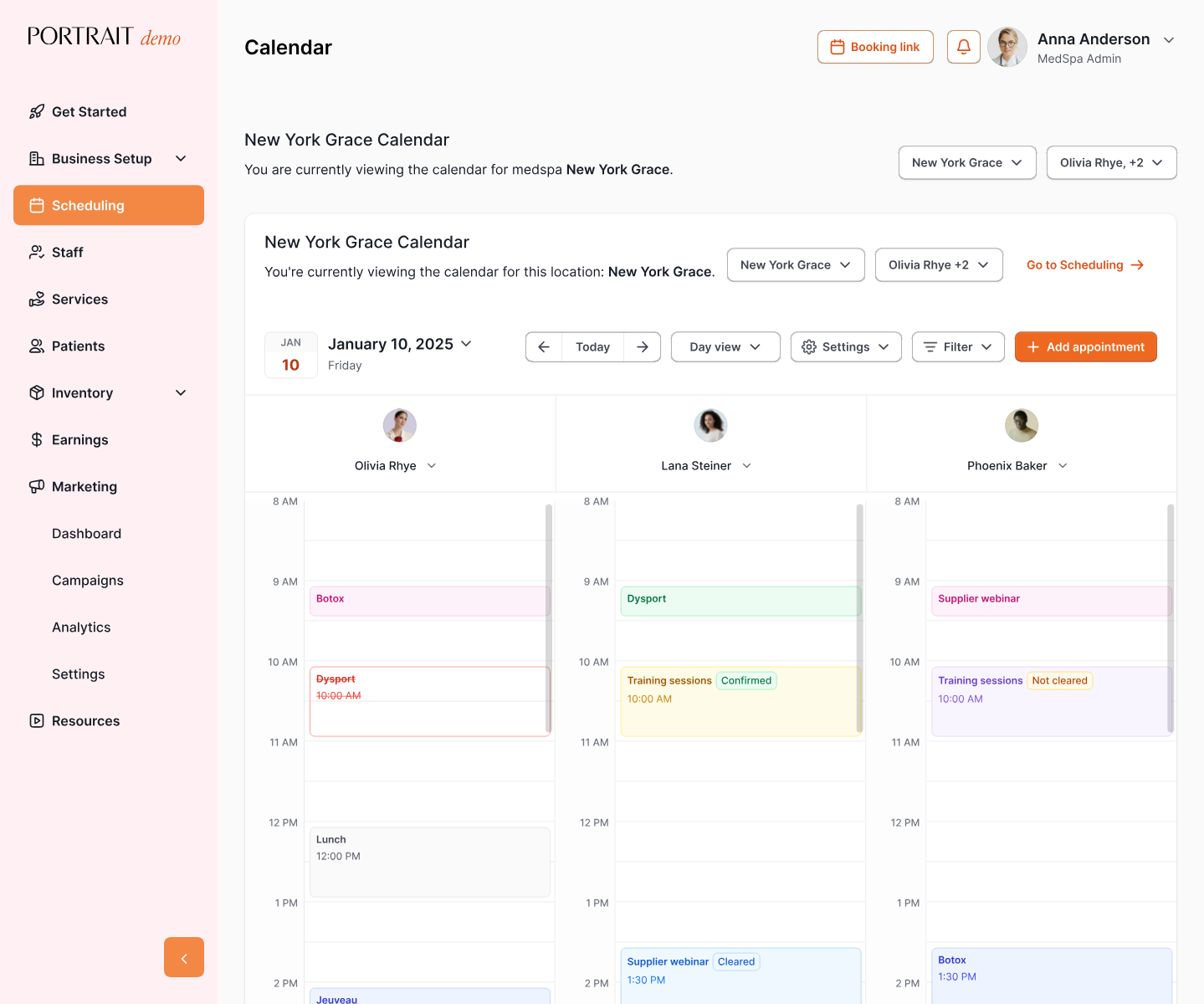


Stay Connected with Portrait Care
Subscribe to our email list and receive the latest insights, updates, and exclusive content delivered straight to your inbox.