GLP-1 Semaglutides: The Practitioner's Complete Guide
Apr 12, 2026

Portrait Care Team
Natasha Peters
Empowering Professionals at Every Stage
Portrait offers strategic expertise to help you make informed decisions and achieve long-term success.
Book Intro CallGLP-1 treatments have completely changed the med spa industry. By the end of 2024, 60% of med spas offered GLP-1 programs. Those that did saw a 9% bump in revenue, while those that didn’t actually lost 2%.
Patients want GLP-1s like Ozempic, Wegovy, Rybelsus, and your competitors are jumping in. Here’s a detailed, straightforward breakdown to help you understand semaglutides, the rules around offering them, what patients experience, and how it impacts your business.
Understanding GLP-1s and Semaglutides
GLP-1 means glucagon-like peptide-1. Your gut releases this hormone when you eat. It tells the pancreas to release insulin, slows down digestion, and signals your brain that you’re full. Semaglutide is a GLP-1 receptor agonist. Basically, it mimics and boosts those signals.
Semaglutide was first approved for type 2 diabetes in 2017. In 2021, the FDA approved it for weight loss. This medication isn’t just another weight loss drug. It helps people lose about 15% of their body weight on average. That’s double what older anti-obesity drugs managed. So, it’s no surprise aesthetic providers want in.
This opportunity goes beyond just better results. Almost 40% of GLP-1 patients are new to the practice. These patients also tend to buy more of your other services once they walk in.
How Semaglutide Works in Weight Management
If you understand this mechanism, you’ll explain it better and build protocols that actually help patients.
- Semaglutide acts on GLP-1 receptors in the hypothalamus, the brain’s hunger regulator.
- It boosts satiety, cuts hunger, and reduces cravings.
- It slows gastric emptying, so people feel stuffed for longer.
- One study showed people ate 38.9% fewer calories after a fatty meal when taking oral semaglutide.
Semaglutide has effects beyond just appetite. Research is exploring connections to cardiovascular disease, metabolic liver disease, sleep apnea, and neurodegenerative conditions. But for your patients, the main thing is that the weight loss is supported by real physiology, not just willpower.
How to Integrate Semaglutides Into Aesthetic Medicine
Weight loss and aesthetics often overlap. Lots of people who lose weight suddenly worry about loose skin, hollow faces, or body shape changes. This is where your med spa skills come in.
- Combining medical weight loss with aesthetic treatments to tighten skin and reshape contours.
- Dermal fillers, skin tightening devices, and body contouring work well with semaglutide programs.
Timing is important. Let your patient’s body stabilize after the weight loss. Usually, that’s around weeks 10 to 16. You’ll get better results with fillers or skin tightening if weight is steady. Build this timing into your patient protocols up front.
This combo is a real business win too. If someone starts weight management with you and gets a plan for skin tightening or fillers down the line, they’ll get fuller results and stick with your practice longer.
Regulations Around Compounded Semaglutides
This part trips up a lot of med spas. Read closely if you want to steer clear of fines or lawsuits.
In early 2025, the FDA lifted the semaglutide shortage. That move killed the legal allowance for compounding it. Compounded semaglutide copies are now severely restricted.
If you’re still using the old compounded meds, you’re risking federal enforcement, state pharmacy board trouble, and lawsuits from manufacturers. Shift away from that model now.
States have unique rules for offering GLP-1 drugs. Always check your specific state's rules before you prescribe anything for the first time, especially as the rules around GLP-1s change.
How to Nail Patient Consults and Follow-Up
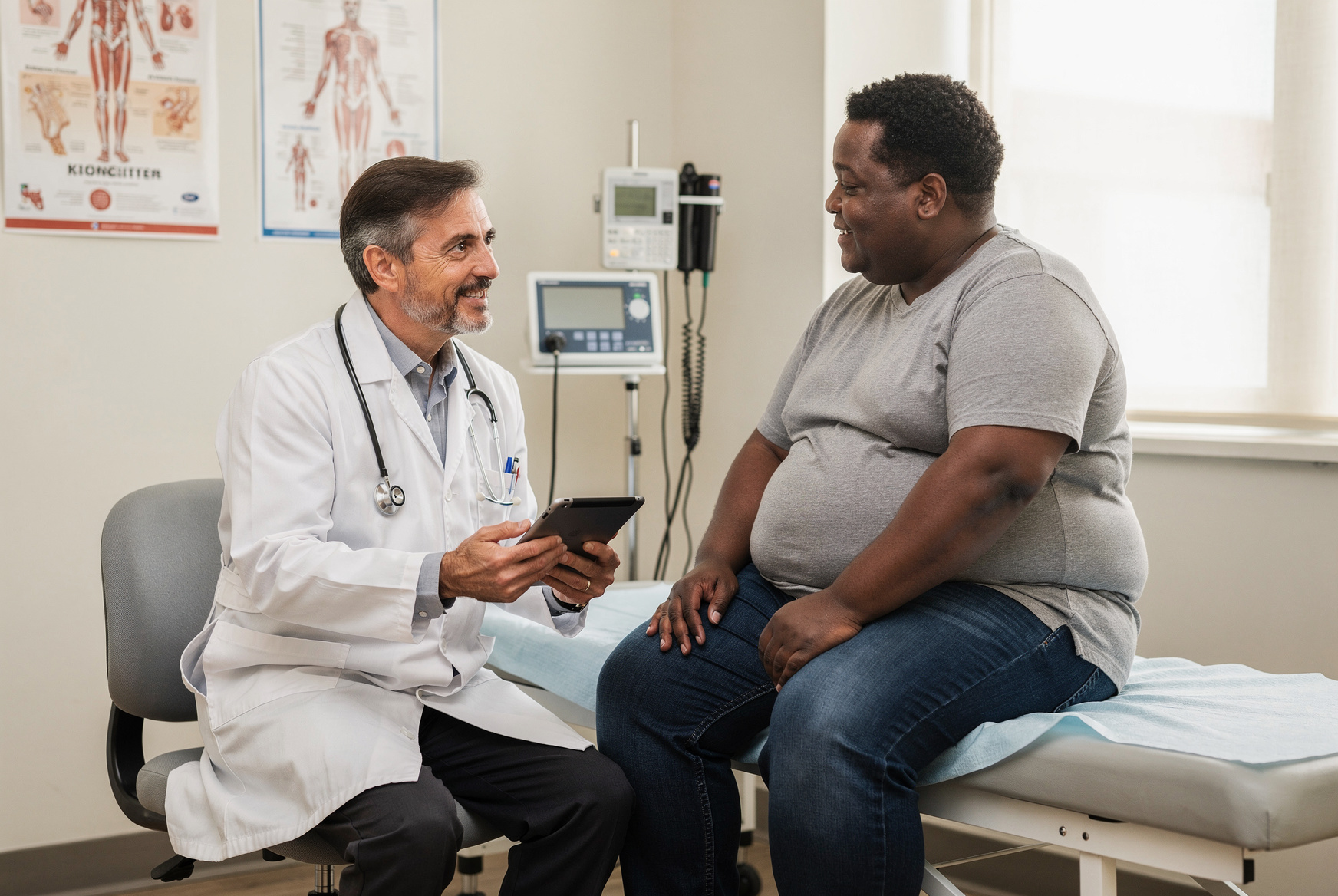
A solid consult protects everyone. Before you start anyone on semaglutide, you need to:
- Take a full health history
- Check current meds
- Run metabolic assessments
- Order labs as needed
This isn’t just best practice. It’s how you find contraindications early. Don't skip it.
Watch for these semaglutide contraindications:
- A family or personal history of medullary thyroid carcinoma
- Multiple endocrine neoplasia type 2
- Acute pancreatitis
- Gastroparesis
Tell patients to get urgent care if they have bad abdominal pain (it could be pancreatitis, cholecystitis, or a blockage).
Most people get some kind of GI side effect: nausea, vomiting, diarrhea, stomach pain, or constipation. These are more common at higher doses, but they usually settle down as you titrate. Prep your patients so they don’t panic and drop out before seeing results.
Follow up at 1, 3, 6, and 12 months. At each visit, check weight, body composition, labs, and any side effects. Adjust the plan as needed. GLP-1 patients expect this hands-on, detailed support. This is what separates a quality program from just handing out scripts.
How to Maximize Your Business with Semaglutides
GLP-1 is a real revenue generator, but the business side has changed. You can’t count on cheap compounded meds and big margins anymore.
Now, you’ll prescribe branded meds, then make money with:
- Membership or program fees
- Extra services like skin consultations and body contouring
- Nutrition coaching
This approach works better long-term. GLP-1 patients spend 63% more with med spas. They’re also nearly four times more likely to be brand new clients. These patients want to invest in themselves. Build bundled memberships with monthly check-ins, telehealth, and VIP access for other treatments.
Marketing is easy: use real stories and before-and-after pics (with consent), plus content that explains the science. Target people searching for weight loss, and show you’re the safe, doctor-supervised choice instead of just “online prescription” shops.
How Portrait Makes Offering GLP-1s Simple
Running a GLP-1 program adds new tasks and lots of data to track. It also means you have to keep up with extra compliance work. Portrait’s all-in-one platform handles everything for you, including scheduling, charting, payments, and inventory.
The automated workflow moves patients from booking to physician oversight for good faith exams and visits, tracks treatments and follow-ups, and makes rebooking super easy.
On compliance, Portrait hooks you up with a nationwide MD network for oversight. You can automate good faith exam steps and handle state legal structure for GLP-1 programs. If you’re in Texas or California, Portrait has resources built right in for their stricter laws.
The Portrait Marketplace even gets you up to 60% off on weight loss meds and supplies, so your margins stay healthy.
The Future of Weightloss is Here
GLP-1 programs aren’t just another fad. By 2030, the anti-obesity drug market should reach $95 billion. Demand is only growing. With the first oral GLP-1 drug hitting the market in late 2025, a whole new group of people who don’t want injections will show up for care.
If you own a med spa, now’s the time to get in. But you have to do it the right way.
- Build real, physician-led protocols.
- Know your state’s rules.
- Link weight loss programs with your other aesthetic services.
Most importantly, use the right tech and systems to manage all the steps. Book an intro call with Portrait to see how the right systems can support new treatments like GLP-1s.
One Platform.
Everything You Need.
Everything You Need.
Portrait combines the technology, support, and savings to run and scale your modern medical wellness business.
Book Intro Call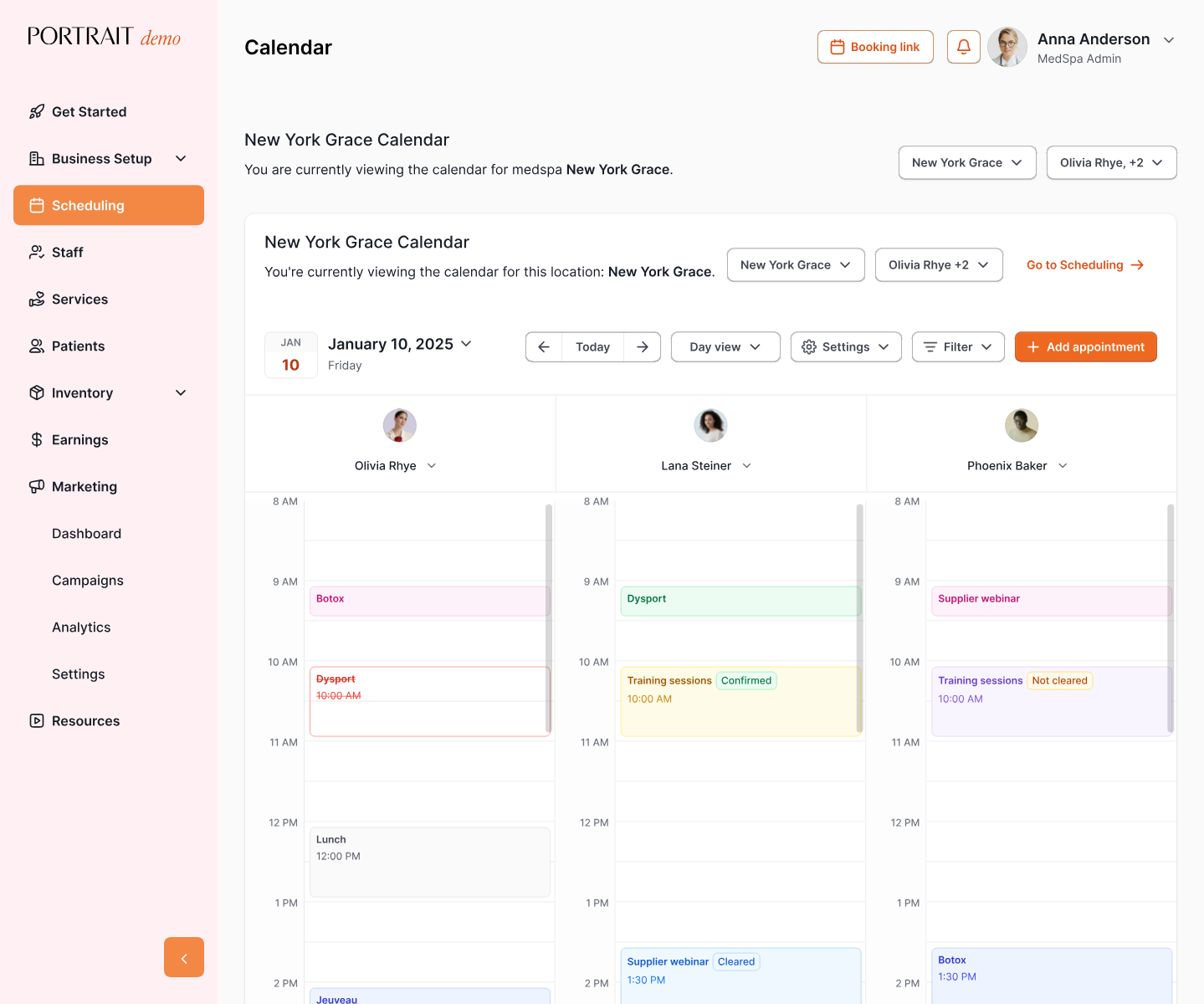
Stay Connected with Portrait Care
Subscribe to our email list and receive the latest insights, updates, and exclusive content delivered straight to your inbox.