Telehealth Regulation News: How to Ensure Virtual Compliance
Sep 14, 2026

Portrait Care Team
The Portrait Team

Empowering Professionals at Every Stage
Portrait offers strategic expertise to help you make informed decisions and achieve long-term success.
Book Intro CallIf you offer telehealth at your med spa, following the latest telehealth rules isn’t optional. Regulators look at virtual care the same way as in-person visits. You need to stay on top of telehealth regulation news to protect your practice, your license, and your reputation.
This post lays out exactly what’s changed, why it matters right now, and what you need to do to stay compliant when you see patients virtually.
Why Virtual Compliance Matters in Aesthetic Medicine
Virtual consults bring convenience, but regulators treat them as clinical care. You need to meet licensing requirements, document everything, and maintain oversight just as you would in-person. It doesn’t matter if a patient’s at home; the same medical standards apply.
If you don’t keep up, you risk a lot more than a slap on the wrist. Inadequate supervision in telemedicine can land you with criminal charges, clinic closures, and license loss. HIPAA fines for privacy problems can cost millions. A single compliance mistake can trash your reputation forever.
Virtual care is tricky for med spas. You have to manage:
- State-specific licensing
- Digital privacy for health information
- Establishing provider-patient relationships before prescribing
You can't skip these steps.
What’s New in Telehealth Regulation
The rules have changed a lot in the last year. Here’s what matters for aesthetic practices right now:
- The DEA and HHS granted another temporary extension for COVID-era telemedicine prescribing through December 31, 2026. You can still prescribe Schedule II-V controlled substances by telehealth, without an in-person visit. But this is temporary. Start planning for stricter rules once it expires.
- Congress extended Medicare telehealth flexibilities through December 31, 2027. After that, most Medicare patients will need to be in a medical facility in a rural area to access telehealth (except for behavioral health).
- HIPAA started full enforcement again in January 2025. You can’t use consumer video apps like regular Zoom, FaceTime, or Skype for telehealth. You need business-class software with a Business Associate Agreement (BAA).
Core Elements of Telehealth Compliance
If you do virtual visits, you need to handle these basics:
- HIPAA and Data Security: Use platforms with end-to-end encryption and a signed BAA. The 2025 Security Rule requires multi-factor authentication, tighter remote access, and a full tech inventory. These rules get enforced now. Check out Portrait's Notice of Privacy Practices to see how PHI stays protected.
- Licensing and Credentialing: Hold an active license where your patient is located, not just your main office. The Interstate Medical Licensure Compact helps for multi-state, but not all states join. Only MDs, DOs, PAs, and NPs can do telehealth under most rules.
- Record-keeping: CMS says you need detailed documentation: the medical necessity, the patient’s location, the tech you used, your credentials, and the patient’s consent. Keep everything as thorough as you would for an in-person visit. Good documentation protects you in an audit.
- Patient Consent: Get specific, informed consent for telehealth itself. Patients should know about tech risks, alternatives, and their right to opt out at any time. Portrait’s consent framework covers all this, including the patient’s real-time location confirmation.
What the Latest Rules Mean for Med Spas
Here’s how the new regulations affect your day-to-day virtual care:
- Regulators see telehealth as real medicine, not just a convenience. For example, in the DOJ’s 2025 Health Care Fraud Takedown, 324 people faced charges and $14.6 billion in intended fraud. Most cases came from unnecessary tests or scripts in telemedicine programs. Virtual care faces just as much, if not more, scrutiny than in-person.
- States keep adding specific requirements. You may have to write visit summaries or get extra consent to share with primary care. Some prescription rules want you to check the Prescription Drug Monitoring Program (PDMP) in both states: yours and the patient’s.
- You can’t just set things up and ignore them. Rules change fast. Last year’s policies might be outdated now. You need an ongoing plan to monitor updates, not a single review.
How Portrait Makes Compliance Simple
Compliance can get exhausting. Portrait takes care of the operational stuff, so you can focus on patients.
- Medical oversight: The Medical Oversight platform connects you with vetted Medical Directors licensed for your state and your services. Good Faith Exam scheduling is automated. You don’t need to micromanage supervision since it’s built in.
- HIPAA workflows: The PC Membership gives you a secure team chat that’s HIPAA-friendly, keeps your EHR records organized, and tightly links everything between in-person and virtual visits. Consent, patient location, and visit documentation are all logged. Legal experts from ByrdAdatto keep core compliance resources updated inside Portrait, so you stay current.
- Payments: The payment system is designed for CPOM-compliant (corporate practice of medicine) financials. You don’t have to guess if you’re doing it right.
What to Do Next: Best Practices for Virtual Compliance
Telehealth rules will only get stricter. As more complex cosmetic procedures move online, so does regulatory attention.
Here’s your game plan to stay ahead:
- Pick someone on your team, even part-time, to stay on top of compliance news.
- Set up regular check-ins to review your policies, tech, and forms.
- Update telehealth consent forms to reflect current requirements.
- Audit your tech stack. Don't use any platform for virtual care unless there’s a signed BAA and up-to-date encryption.
Staying current isn’t a one-off project. It’s just part of running a virtual-ready, compliant med spa in 2026. You don’t have to do it alone. With the right tools, you’ll build day-to-day compliance into your workflow instead of scrambling to catch up later.
If you want to see how Portrait keeps med spas compliant with virtual care rules, check out the Compliance Hub or book an intro call to see how Portrait makes compliance easy.
Related reading
One Platform.
Everything You Need.
Everything You Need.
Portrait combines the technology, support, and savings to run and scale your modern medical wellness business.
Book Intro Call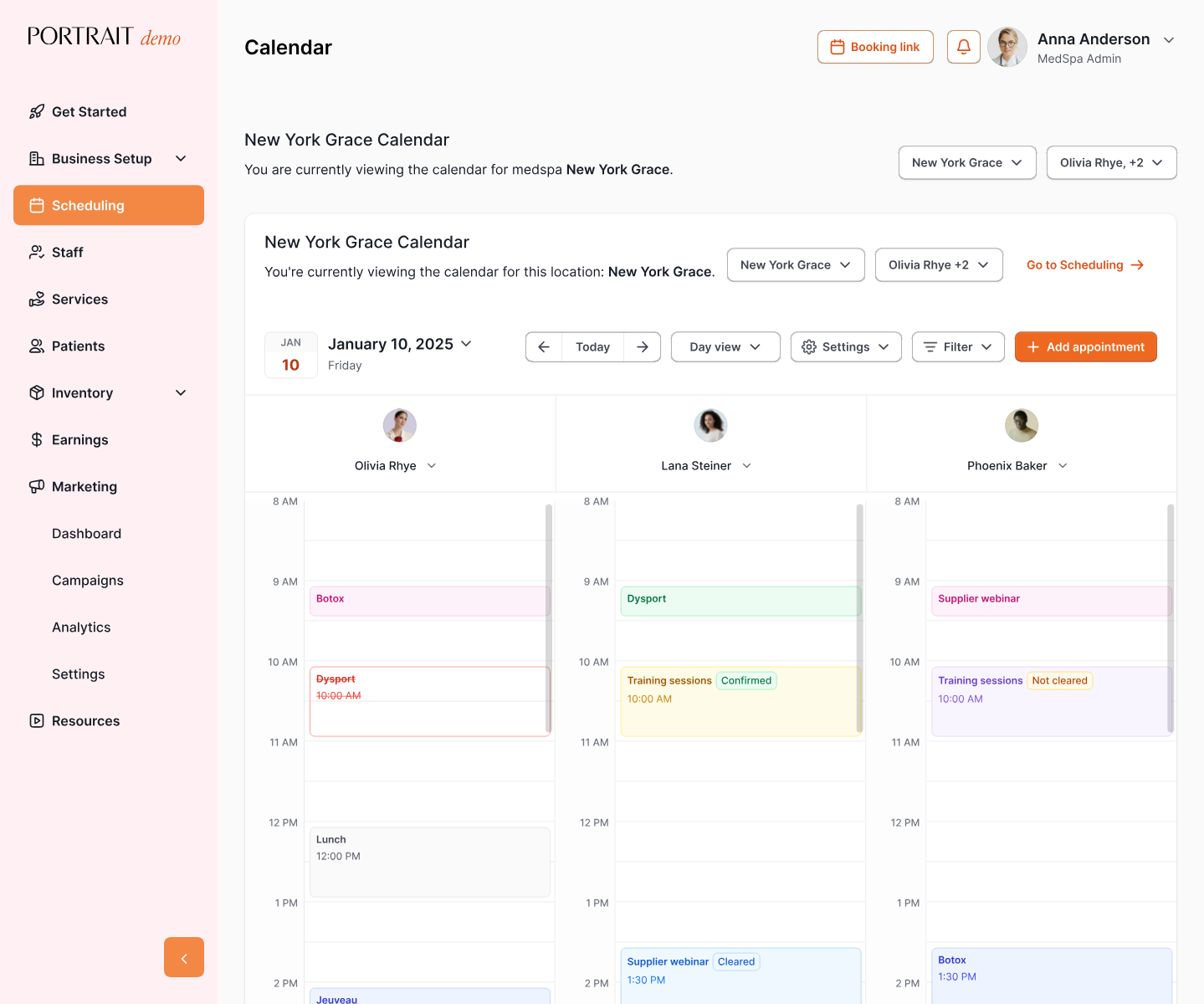



Stay Connected with Portrait Care
Subscribe to our email list and receive the latest insights, updates, and exclusive content delivered straight to your inbox.