Med Spas: What Is a Good Faith Exam and Why It Matters
Oct 14, 2026

Portrait Care Team
Khadija Sukhera

Empowering Professionals at Every Stage
Portrait offers strategic expertise to help you make informed decisions and achieve long-term success.
Book Intro CallBy Khadija Sukhera, Barrister, Lincoln's Inn · Medically reviewed by Patrick Blake, MD, FAAD · Last updated 2026-09-28
If you run a med spa, you need to know this: every patient must get a medical evaluation, called a Good Faith Exam, before any aesthetic treatment. It’s not only the law but also the key to safe, compliant, and successful practice. Skip it or do it wrong and you risk legal trouble. Do it right and your med spa is both safe and profitable.
A Good Faith Exam (GFE) is a medical evaluation that a licensed healthcare provider must perform before any aesthetic treatment. The GFE checks if a patient is safe for the procedure. It always has two main steps:
- Go over the patient’s medical history.
- Physically examine the area you’re planning to treat.
This isn’t something you can skip. Even if you’re just doing “simple” procedures like injectables or chemical peels, you need a GFE because every treatment carries medical risk. The GFE also starts the practitioner-patient relationship. You’ve got to do that before you give out prescription drugs or use certain medical devices, by law.
What Is a Good Faith Exam and Why Do You Need One?
Skip the GFE, or just rush through it, and you’ve got a compliance problem. That kind of mistake can bring real consequences like state board investigations, fines between $5,000 and $50,000, loss of medical license, lawsuits, and bad press. If you cut corners on GFEs, you probably also have poor supervision, improper delegation, and unclear orders.
Compliance isn’t optional in a med spa. It’s how you protect your business and your license. The GFE is step one.
The Three Parts of a GFE
To be compliant, a GFE needs three things:
- Detailed medical history: Look at what meds and supplements the patient uses, allergies, previous procedures, important health conditions, and anything that affects treatment or could be a risk.
- Physical exam: You actually check the treatment site. A visual or manual exam is required. You need a clinical impression based on what you observe. It shouldn’t feel like a formality or a checkbox. It’s hands-on and specific.
- Proper documentation: This is your proof. Every GFE record has to include the patient intake form, your exam notes and findings, your credentials (name, title, license number), and what treatments the patient is cleared for. Hold onto these records for at least five to seven years as most states require it.
How To Work Good Faith Exams Into Every Day
Knowing what a GFE is and actually doing it for every patient are two different things. You’ve got to fit it into your everyday workflow; it can’t be an afterthought.
Block enough time. Portrait recommends 30 minutes for every consultation. That lets you cover medical history, current skincare, treatment goals, and the exam itself. When you take your time, patients notice. Rushed exams feel careless and send the wrong message.
Keep all records in one place. If you use different forms, texting, or separate software, you’re bound to lose track. Every patient should have just one digital chart, easy to pull up and update.
Don’t treat the GFE as a one-and-done event, it needs to stay current. Update it if the patient wants a new treatment, their health changes, or if it’s been a year since the last exam.
Who Can Perform a GFE?
Only physicians, physician assistants (PA), or advanced practice nurses (APN) can do a GFE. Usually, PAs and APNs need a supervising doctor to delegate this task.
Registered nurses can help, but only doctors, PAs, or APNs can create the actual treatment orders. That’s a legal distinction you can’t ignore.
Every state has its own set of rules. In Texas, a physician needs to examine and give orders before any energy device treatment. In California or New York, the physician medical director must be hands-on with clinical oversight. Always check your state’s policies.
Common Mistakes and How to Avoid Them
The most common GFE pitfalls:
- Leaving out key documentation
- Not having clear protocols
- Staff who don’t understand the rules
- Unqualified staff doing or signing off on exams
Avoid those mistakes by:
- Using GFE templates to make sure every field gets done
- Putting all your exam records right into your EMR
- Training every staff member, including the front desk, on GFE rules and their purpose
- Running compliance audits often so nothing slips by
- Writing a policy for when to do new GFEs, who can do them, and how you document everything
Don’t forget informed consent. Getting a signature isn’t enough. You need to talk patients through the procedure and document that conversation. Leaving out this step leaves your med spa open to lawsuits and penalties.
State Law Differences and Getting Certified
GFE rules change by state, and they change often. What works in Florida might not be ok in New York or Texas. Some states allow video consults. Others, like Tennessee or Arkansas, require patients to come in at least once before you can use telehealth.
If you operate in several states or want to add telehealth, you need to pay attention. Virtual care is held to the same standards as in-person exams. You need the same medical license, recordkeeping, and physician supervision. Bad telemedicine oversight can get clinics shut down or worse.
Use guides like Portrait’s for Texas, California, and New York to get started. But plan on staying educated over time. You can’t just check the rules once and forget it.
How Portrait Helps You Keep Compliant and Grow
Staying compliant with the GFE takes more than just good intentions. You need real systems. Portrait does that by keeping every patient’s intake forms, exam notes, photos, and treatment records in one place. When someone books online, their forms show up in their chart before you see them. Your provider always has the info they need.
Portrait’s scheduling tools let you set aside the right amount of time for each consult. Their charting tools make it simple to record your findings, treatment orders, and consent all in one go. If you’ve got more than one provider or location, having this info in one spot means your practice is always ready for an audit.
Your Playbook for a Med Spa That’s Compliant and Thriving
A Good Faith Exam is what makes everything else, including safe treatments, compliance, and strong patient care, possible. It protects patients, protects your license, and sets your standard of care.
Include a GFE in every consult. Document it in detail. Know exactly who can do it where you practice. Update it when needed. Use tools that keep the process consistent and easy, so you don’t have to worry about forgetting anything.
Compliance isn’t only about avoiding legal trouble. As Portrait’s guide puts it, it’s a smart business move that protects your patients, your bottom line, and your reputation. The GFE is where it all starts.
Related reading
- Sculptra Wholesale: A Guide for Licensed Practices
- Kybella Wholesale Cost: The Average Price and How to Save
- What Is a Medical Spa?
- Medical Spa Laws and Requirements in Idaho
- Medical Spa Laws and Requirements in Nashville
Save up to 60% on select products
Alongside ownership and licensing considerations, supply costs shape your practice budget. Explore purchasing through Portrait's marketplace, with savings that vary by product and purchasing needs. See your supply pricing.
One Platform.
Everything You Need.
Everything You Need.
Portrait combines the technology, support, and savings to run and scale your modern medical wellness business.
Book Intro Call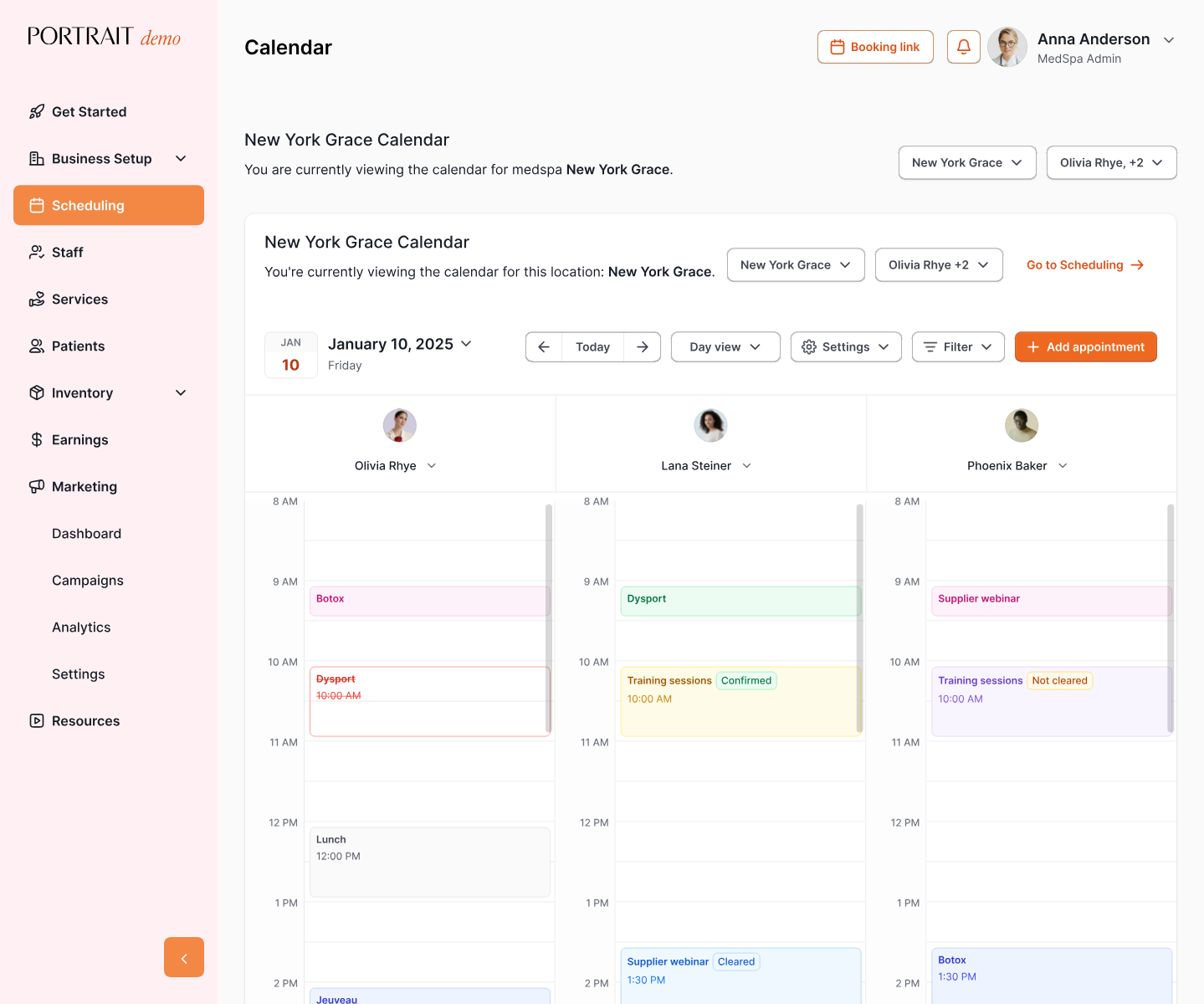

Stay Connected with Portrait Care
Subscribe to our email list and receive the latest insights, updates, and exclusive content delivered straight to your inbox.