IV Therapy Certifications: What Your Clinic Needs Before Offering IVs
Oct 7, 2026

Portrait Care Team
Empowering Professionals at Every Stage
Portrait offers strategic expertise to help you make informed decisions and achieve long-term success.
Book Intro CallIf you're thinking about adding IV therapy to your med spa, you need more than just a new treatment on your menu. You need solid protocols, the right people, a supply chain that works, and absolute compliance. That's your fastest way to avoid big headaches, protect your business, and keep patients safe.
The market for IV therapy is exploding. The global IV hydration therapy market is set to nearly double by 2030. People want hydration drips, NAD+, glutathione, vitamin C infusions, and immune support cocktails.
But adding IVs without the right systems is risky. It’s a medical service that involves vascular access, sterile technique, patient safety protocols, state scope-of-practice rules, medical oversight, emergency response, and documentation. Let’s break down what you should have in place before launching IV hydration or vitamin infusions.
Why IV Services Are Different From Other Spa Treatments
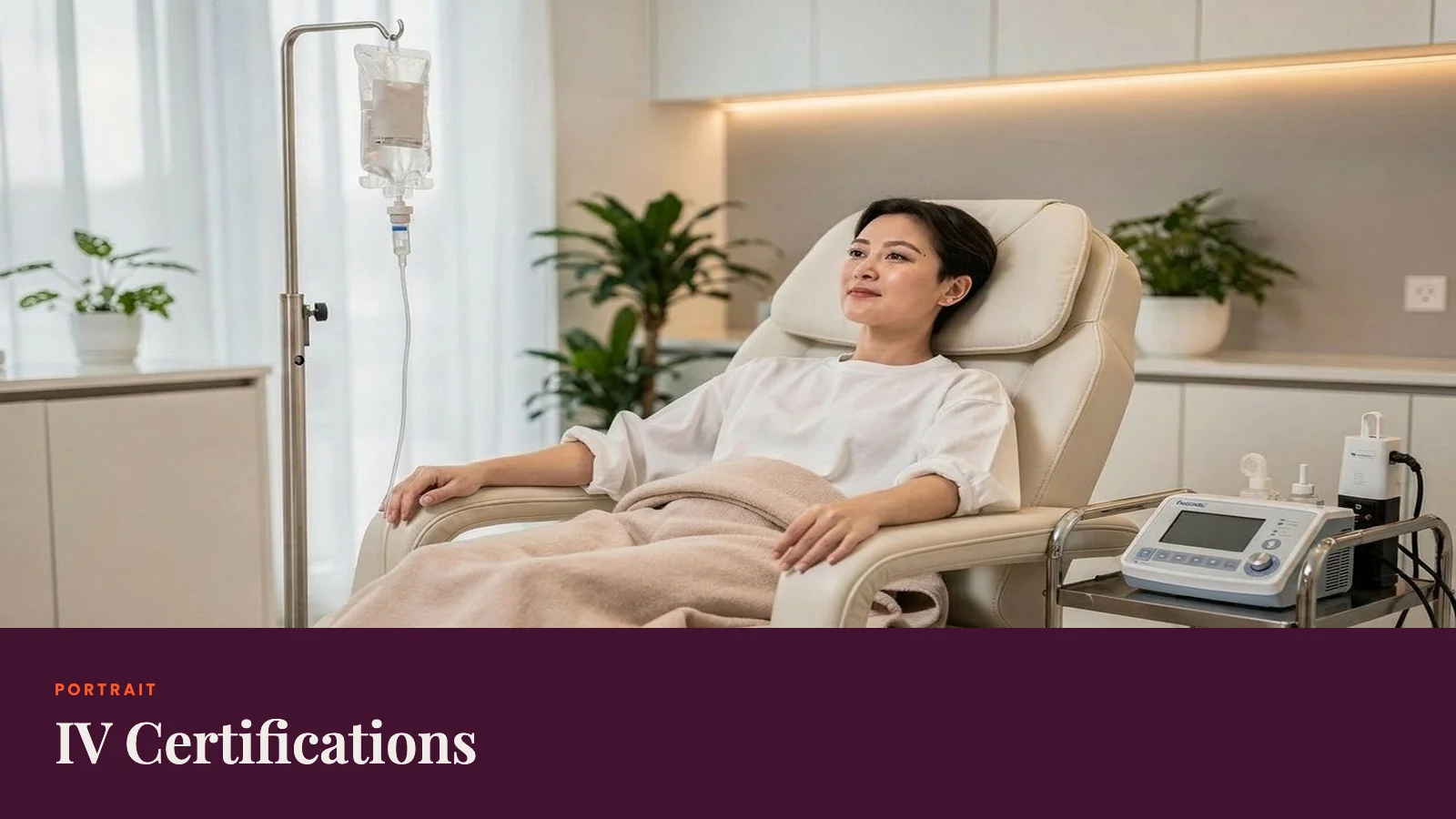
IV therapy isn't like rolling out a new facial. Every infusion gives you direct access to a patient's bloodstream. Mistakes aren’t trivial. You need a detailed, repeatable workflow that covers patient screening, ingredient handling, sterile technique, monitoring, and reacting to bad reactions before your first IV therapy patient ever sits down.
As we explain in our Compliance 101 guide, IV and vitamin infusions are "direct medical interventions involving substances administered right into a patient’s bloodstream". They’re part of the scope of medical practice. That impacts your decisions about staffing, oversight, and documentation.
What an IV Therapy Certification Really Means
An IV therapy certification is just training. It doesn’t give someone a license. It doesn't give prescriptive authority. A certification can teach a clinician how to stick a vein, run an IV, and manage problems. But it won’t let someone without a license start IVs, and it doesn’t bypass state law.
In our complete guide to med spa certifications, we lay it out simply: “Certification ≠ License... a certification alone does not let you legally provide paid services.” Before you put a staff member through a course, check if it matches their license and state rules.
What Quality IV Training Covers
Good IV training for licensed medical staff covers:
- Venous anatomy and site selection
- Venipuncture technique
- Aseptic and sterile technique
- IV fluid types and osmolarity basics
- Infusion rates
- Patient assessment before and during the infusion
- Complication recognition: infiltration, extravasation, phlebitis
- Vasovagal response management
- Allergic reaction and anaphylaxis response
- Documentation requirements
- Emergency escalation
What Certification Doesn’t Grant
Certification doesn’t let unlicensed people start IVs. It doesn’t allow anyone to diagnose deficiencies, prescribe drugs, compound meds, or create their own treatment protocols.
Your scope of practice is set by your state’s licensing board and your medical oversight. That’s where you find what your team can do, not in a certificate.
Don’t Skip Checking Your State’s Scope-of-Practice Rules
IV rules change from state to state and license to license. A 2025 study in JAMA reported only 17 states even define nursing scope of practice for IV therapy.
Ten states have rules about standing orders, and most reject them in favor of patient-specific prescriptions. So, don’t assume what worked in another state applies to you.
States like Texas, California, and Florida classify IV therapy as medical practice. Our guides for Texas, California, and Florida spell out what counts for staffing, ownership, and oversight. Always review your state’s rules before expanding your services.
What to Ask Before Your First IV Patient
- Who can assess the patient and start a prescriber-patient relationship?
- Who’s allowed to insert the IV catheter?
- Who preps the infusion ingredients?
- Who prescribes the IV treatment?
- Who must be present or available during IV infusions?
- What documentation do you have to generate at each step?
- Which emergency gear must always be available?
If you’re not sure about any of these, you’re not ready to launch.
Make Medical Oversight and Delegation Bulletproof
Most states want a physician medical director over all clinical treatments at a med spa. IV therapy counts as medical. Your medical director shouldn’t just sign paperwork.
They approve clinical protocols, build eligibility guidelines, set emergency procedures, review competencies, and they’re reachable when you’re open.
Active oversight is the rule. That means chart reviews, updating protocols, and jumping in when things go wrong. If your medical director’s 100 miles away while an IV is being given, that’s not real oversight.
In Texas, new IV rules just followed a med spa incident with a medical director off-site where a patient died and the clinic lost its license. With Portrait’s oversight tools, you get MD matching, Good Faith Exam automation, plus policies and protocols support to help prevent issues like these.
Get Written Protocols Done Early
Your protocols protect everyone: patients, your staff, and your business. At the very least, they need to cover:
- Patient intake
- Contraindication checks
- Informed consent collection
- Ingredient selection and dosing
- Infusion monitoring
- Emergency escalation steps
- Incident reporting
- Follow-up process
Get your clinical team on board before day one.
Train the Right People for the Right Roles
Every role needs the right training. Clinical staff need to be hands-on IV pros. Non-clinical staff don’t start IVs, but they’re your front line for screening and safety.
For instance, a front desk team member who books an IV patient with kidney disease and doesn’t flag it is a liability. Your whole team needs training to keep your program safe.
Our training guide says, "Training isn’t a box to check. It’s the root of your clinic’s success."
Clinical Staff: What They Need to Know
- Patient screening
- IV placement techniques
- Sterile technique
- Infusion monitoring
- Adverse reaction management
- Charting requirements
- Patient teaching before and after
- BLS certification (minimum)
Our essential certifications guide explains how ACLS builds on BLS, prepping your team for medical emergencies. Plan for 20 to 40 hours of yearly continuing education to keep everyone sharp.
Front Desk and Patient Coordinator Training
These team members are the first point of contact. They need to know what to ask before booking, what red flags to pass to clinical staff, how to describe IV therapy in plain terms, and when a question needs a licensed provider. They should never recommend drips or make clinical calls.
Get Emergency Protocols in Place Before You Start
IV therapy has risks. Infiltration happens in about 20-25% of IV placements. There are real chances for allergic reactions, phlebitis, vasovagal episodes, and even anaphylaxis. Your team has to know what to do ahead of time.
Your emergency plan should cover:
- Staff roles
- Clear escalation steps
- What emergency equipment’s required
- How to document and report adverse events
Run drills. Review every incident. Tweak your protocols to keep getting better. The Compliance 101 guide makes it clear, managing emergency situations like anaphylaxis is non-negotiable.
When Not to Treat
A safe IV program relies on saying no when it’s smart. Patients who need extra clinical review usually include people who are pregnant, have kidney disease or heart failure, take blood thinners, have complicated drug interactions, active infections, past severe reactions, or an unclear medical history.
Your medical director should list clear screening and contraindication rules. Never let patients pick a drip without a medical evaluation.
Lock In Documentation, Consent, and EHR Workflows
Strong documentation keeps your business and patients safe. Every IV treatment should record:
- Intake forms
- Full medical history
- Allergy and medication review
- Vitals before and after
- Signed informed consent
- Details of the infusion: ingredients, doses, lot numbers, expiration dates
- Time in/time out
- Patient response during and after
- Patient aftercare instructions
- Follow-up notes
It’s a lot, but it’s the best defense if something goes wrong. A good EHR helps you stay organized and consistent.
EHR: Why It Matters for IV Therapy
IV services need consistent charting, fast access to patient history, templates for treatments, inventory tracking, and reporting. If you use scattered software, you’ll miss things.
With Portrait’s all-in-one platform, you get HIPAA-compliant EHR, scheduling, payments, charting, and inventory in one login. Intake forms link straight to charts. Treatments update your inventory for you. You’ll stay compliant and ready if you’re ever audited.
Review Insurance, Consent, and Set Expectations
Double-check that your malpractice policy covers IV therapy. Some insurance charges more for NAD+ or high-dose vitamin C, and some need extra documentation before they’ll approve a claim. Don’t skip your general liability review.
Your consent forms need to make it clear: only licensed providers do IV therapy, and it’s an elective treatment. Don’t market guaranteed results. Claims like “detox,” “boost immunity,” or “hangover cure” attract regulators and upset clients if results don’t match. Keep language honest and medically sound.
Be Smart About Supply and Inventory
IV therapy requires:
- IV bags (in several formulations)
- Administration sets and tubing
- Sharps containers
- Catheters in several sizes
- Antiseptics, gloves, dressings
- Blood pressure cuffs, pulse oximeters
- Emergency meds and supplies, as your protocols require
- Evidence-based wellness additives (like vitamins, minerals, glutathione, NAD+)
Most of these have expiration dates and some need specific storage. If your inventory’s a mess, you’ll lose money on expired or out-of-stock products and your patient experience will suffer. Standardize your orders and track what you use to avoid waste.
Don’t Let Inventory Kill Your Margins
Too much stock ties up cash. Too little leads to missed appointments and lost revenue. It’s easy to avoid. Our training guide says, “Poor inventory management kills profit for a lot of med spas. You can fix it with simple systems.” Link your ordering with your treatment volume and quit guessing.
Portrait Helps You Get Supplies and Keep Operations Simple
Supply costs are a big variable in IV profitability. Portrait connects you to a big supplier network, with savings of up to 60% on select products, including IV/IM essentials and thousands of other compliant medical items.
Manage orders in one place. Our inventory tools are built in, with reminders and tracking connected to treatments. When you do an IV, your inventory updates automatically. Portrait lets you track spending, see usage, and handle reorders so you never run out mid-patient.
Plus, you can re-invest the money you save into marketing, new hires, or expanding your services. Our operations support is made for IV hydration clinics and includes supplier access, staffing help, and a foundation for safe, profitable growth.
Launch IV Therapy With Confidence
IV therapy isn’t that complicated when you build your program the right way. Train the right people, know your state rules, get real medical oversight, write solid protocols, standardize your documentation, set up for emergencies, and lock in your inventory system. IV certification is just a piece, it’s not the whole puzzle.
Portrait is built so you can launch IV services with less stress. You get HIPAA-compliant EHR, scheduling, medical director help, compliance tools, and supply savings all on one platform.
If you’re planning to start IV services, check out our IV hydration clinic launch guide to see how easy it is to get started and and get it right.
Savings vary by practice, product mix, and order volume. Figures reflect select products and are not guaranteed.
Related reading
One Platform.
Everything You Need.
Everything You Need.
Portrait combines the technology, support, and savings to run and scale your modern medical wellness business.
Book Intro Call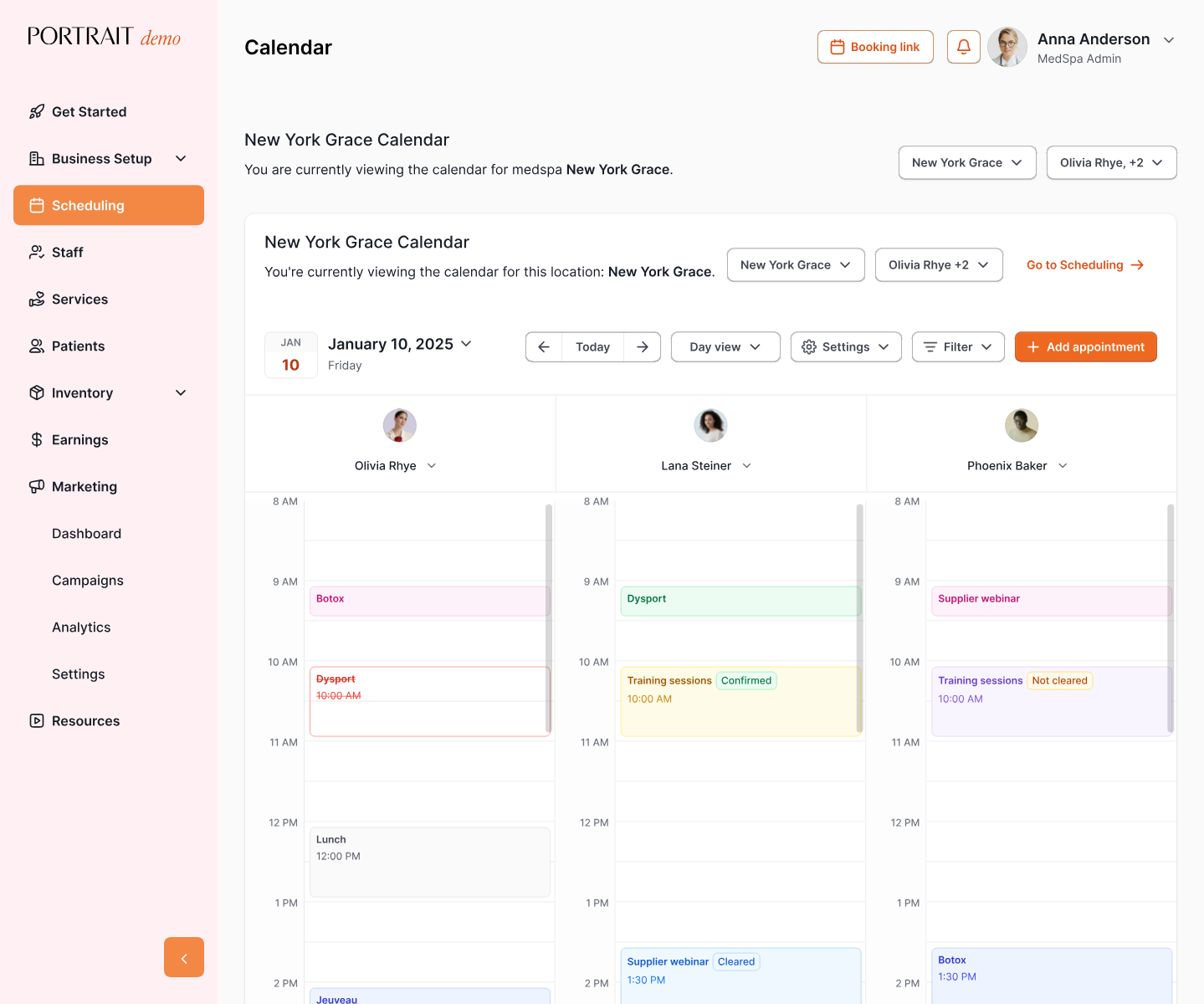

Stay Connected with Portrait Care
Subscribe to our email list and receive the latest insights, updates, and exclusive content delivered straight to your inbox.