FDA Approval News for Aesthetics: What to Know for 2026
Sep 14, 2026

Portrait Care Team
Natasha Peters

Empowering Professionals at Every Stage
Portrait offers strategic expertise to help you make informed decisions and achieve long-term success.
Book Intro CallIf you own or manage a med spa, staying on top of FDA aesthetics approval news is one of the most important things you can do. New injectables and energy-based devices are getting green lit, and you’re going to see what gets approved quickly turn into what your patients want, what your competitors offer, and what you need to deliver to stay relevant.
Let’s break down what’s happening right now with FDA approvals and how you can turn these into opportunities for your practice.
The Changing Regulatory Environment for Aesthetic Medicine
Medical spa regulations always shift. The rules around aesthetic medicine are influenced by new technologies, evolving treatment modalities, and current public health priorities. It’s not static at all. Regulatory bodies keep updating things, add new statutes, and change what matters most for enforcement.
The FDA controls every device, drug, and biologic you use. That means they decide what you can use them for, what has to be shown on the label, and safety standards. When rules shift, you’ll need to change your operations, too.
You’re going to see increased scrutiny, not less. What is called a best practice today often becomes required by law tomorrow. It's essential to stay on top of these approvals for compliance and patient demand.
FDA Aesthetics Approval News for 2026: Key Developments to Watch
There’s a lot of movement in FDA approvals in late 2025 and into 2026. Here are the major aesthetics updates you need to know.
Innovative Injectable Treatments on the Horizon
Letybo (letibotulinumtoxinA)
This injectable got FDA approval in 2024 for moderate-to-severe glabellar lines. It’s developed by Hugel and is already the top-selling botulinum toxin in South Korea. More US practices now want a lower-protein, highly purified alternative to the older neurotoxins. Results last three to six months, which is about the same as others.
Relfydess (RelabotulinumtoxinA)
This toxin from Galderma is a liquid toxin, with no need for reconstitution. The FDA accepted its BLA resubmission in February 2026, and approval looks likely. Patients in clinical trials saw effects in as little as 24 hours, and results can last up to six months. It’s already available in over 20 countries.
Obagi saypha MagIQ
For dermal fillers, Obagi saypha MagIQ got FDA approval in September 2025 and is planned for a US launch in 2026. It uses proprietary 3D hyaluronic acid matrix tech and was tested across all Fitzpatrick skin types for correcting nasolabial folds. This marks Obagi Medical’s first HA filler for the US market.
Evolysse Sculpt
This treatment from Evolus has a PMA application pending for restoring volume in the mid-face, with approval expected later in 2026. It’s designed with Cold-X Technology, which keeps the natural HA molecule structure intact, aiming for longer-lasting results. Their clinical trial tracked 304 patients over two years.
Overall Injectable Trends
Here’s the big trend: We’re seeing the industry shift from pure volumizing fillers to more regenerative treatments. Biostimulators like Sculptra and Radiesse are going mainstream, and interest in PDRN skin boosters is rising fast. Patients want gradual, subtle results, so the injectable market is responding.
Next-Generation Device-Based Therapies
Ultherapy PRIME
This device got FDA clearance in November 2025 for use on the abdomen and arms. It’s now the only FDA-cleared treatment with real-time visualization for face, neck, décolleté, and body—all in one device. That’s a big addition to what you can offer.
Emsculpt Neo
This body contouring procedure received new clearance in October 2025 for medical goals beyond aesthetic use. You can use it for muscle atrophy prevention, better circulation, and helping patients recover after surgery.
Cutera truFlex
Similarly, Cutera truFlex also received approvals in December 2025 for rehab and therapy. With these, you’re able to work with new patient groups, not just the usual med spa crowd.
RF Microneedling Safety Alerts
The FDA put out a safety alert in October 2025 about risks of RF microneedling, including burns, scars, and nerve injuries. Most issues were tied to unregulated devices or operators without medical licenses.
If you do RF microneedling, check that your device is cleared and your protocols are tight. You also need to be aware of this news to educate patients properly.
Impact on Med Spa Owners and Practitioners
Every new FDA approval means business decisions. A new toxin or filler on the market means you have to decide if it’s worth adding, train staff to use it, and then market it to patients. That takes time and budget.
Patient demand is shifting too. GLP-1 medications are causing some patients to lose weight fast, and that makes more people want skin tightening, biostimulation, and body contouring. If you haven’t thought about how to address "GLP-1 face" and body laxity, start planning now.
“Prejuvenation” is another trend. More patients in their 20s and 30s asking about skin boosters and baby Botox to prevent instead of correct. Your team will need to be ready to have those preventative care conversations.
Leveraging FDA Aesthetics Approval News to Grow Your Practice
You can use new FDA approvals as a way to grow if you do it right. When a treatment gets clearance, patients see it as safe and proven, which is a marketing win. But you have to get the details right.
Timing and positioning matter. Don’t offer or market a new treatment before your staff’s trained and your intake forms are updated. Instead, follow this order:
- Understand the approval
- Get staff trained
- Update documentation
- Then market it
As aesthetic medicine keeps evolving and more treatments earn FDA approval, training and certification aren’t just good ideas, they’re a must for legal and clinical reasons.
Marketing Opportunities Tied to New Approvals
When you add a newly cleared treatment, be sure your marketing is clear and real. Make your ads accurate and avoid any hype or unrealistic promises. Share before-and-after photos that set real expectations and always include the right disclaimers.
It’s not only ethical, but required. The FTC and FDA both expect you to back up any claims with evidence and keep claims inside the scope of what got approved. Don’t over-promise.
To keep things practical: Lead with the FDA clearance as proof of trust, explain in plain language what the treatment does, and let real patient results tell the rest over time.
Ensuring Compliance: Steps Every Aesthetic Practice Should Consider
To stay compliant when FDA rules change, lock in these habits. You’ll find more details in our Compliance 101 guide, but here are the basics:
- Always keep a compliance manual that’s current. Include patient safety protocols, informed consent forms, adverse event tracking, and HIPAA guidelines.
- Spell out every staff member’s scope of practice. Only licensed clinicians should handle prescription-based or more complex services.
- Use software to track licensing, training certificates, and equipment maintenance records.
- Run routine risk assessments to spot any gaps between your policies and the latest federal or state rules.
- Assign someone as a compliance lead, even if it’s just part of their role, to own this as rules keep shifting.
MoCRA (Modernization of Cosmetics Regulation Act) matters too. Facility registration, product listings, safety documentation, and adverse event reporting are now required, and GMP compliance deadlines passed at the end of 2025.
How Portrait Supports Med Spas Navigating Regulatory Shifts
Knowing about new FDA approvals is one thing. Actually having the right tools and systems in place to take action is another. That’s where Portrait’s platform can help.
Portrait loads in medical oversight tech just for med spas: things like MD matching, digital good-faith exams, ready-to-use SOPs, policy packs, and automatic updates as new regs roll out. So when a new product gets approved, you’re ready overnight. No scrambling.
Portrait also partners with ByrdAdatto, a leading law firm for healthcare, to boost compliance resources and make sure the software is always up to date for new laws. You get state-specific advice, better documentation tools, and oversight that fits the moment. Over 800 spas and clinics already use Portrait for compliance, and the platform is built for exactly this kind of nonstop change.
Staying at the Forefront of Aesthetic Advancements
The med spas that do best don’t react to approvals after they hit. They’re tracking the approval pipeline, getting trained, and have compliance systems so they can move fast when something drops.
2026 is looking huge for new injectable and device approvals. If you’re not already following what’s coming, build that habit now. And if your compliance game can’t keep up with regulation shifts, fix that first.
The tools, training, and oversight are already out there. Try Portrait for free today and see how it supports your clinic in adopting the latest advancements in aesthetics.
Related reading
One Platform.
Everything You Need.
Everything You Need.
Portrait combines the technology, support, and savings to run and scale your modern medical wellness business.
Book Intro Call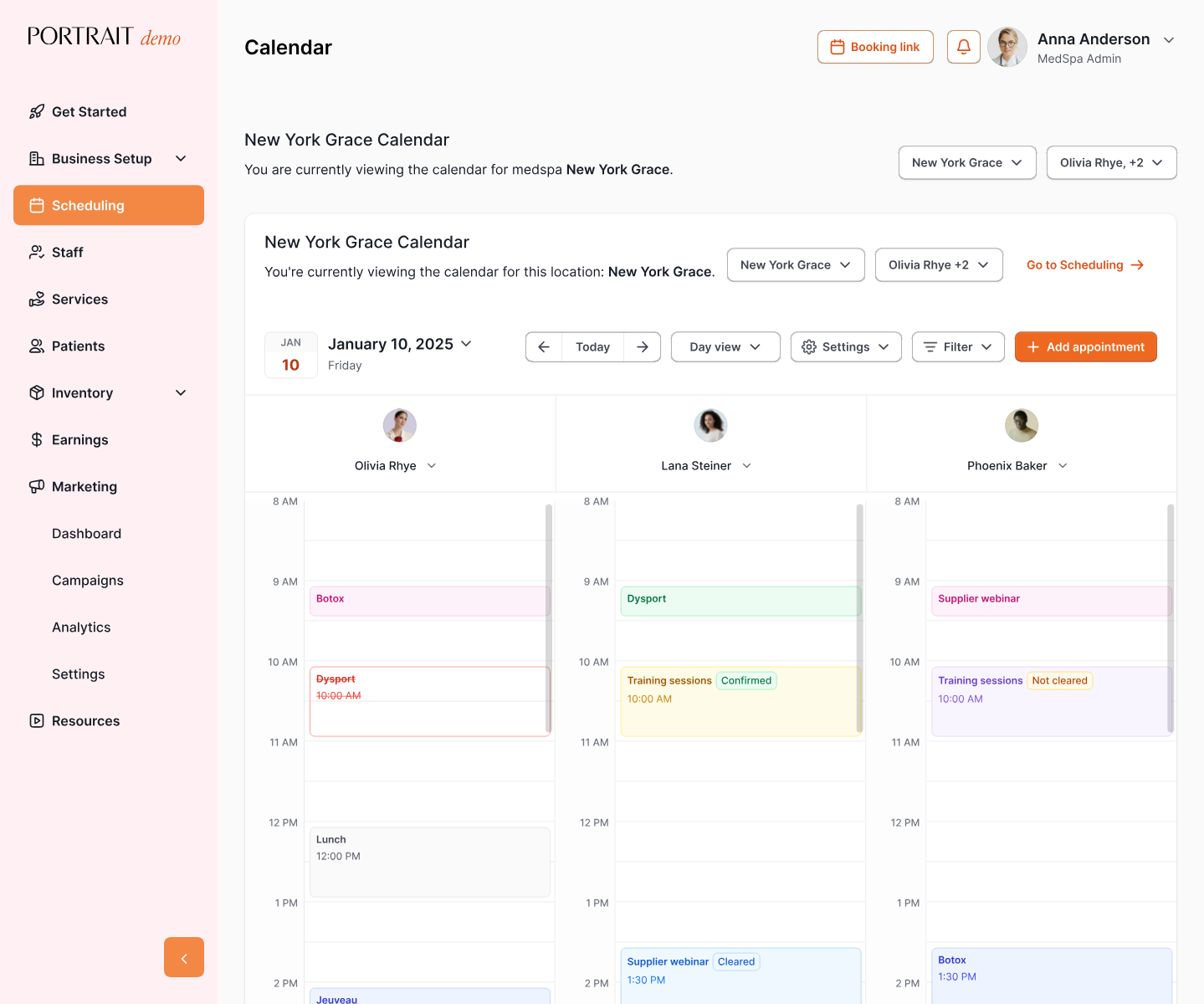


Stay Connected with Portrait Care
Subscribe to our email list and receive the latest insights, updates, and exclusive content delivered straight to your inbox.