Empowering Professionals at Every Stage
Portrait offers strategic expertise to help you make informed decisions and achieve long-term success.
Book Intro CallIf you want to sell your dermatology practice, the short answer is yes, you can. Buyers are looking for clinics with clean books, solid operations, and teams that don’t crumble when the owner leaves.
To get a strong sale, you’ve got to get a few things right from the start: prepping your financials, running things smoothly, valuing your clinic correctly, and making sure your transition plan is ready to go.
Here’s how to prep your practice for sale and get buyers to pay more.
What to Think About Before Selling
Before doing anything else, decide why you’re selling and what you want from the deal. Are you retiring, joining a bigger group, or just looking to lower your risk? Your reasons shape your whole approach, including timeline, price, and who you should target as buyers.
Timing counts more than most realize. If you’ve got a year or more, you can tighten up operations, boost revenue, and get a higher multiple. If time’s short, be ready to go faster and maybe accept a lower price.
Answer these questions honestly before you go any further:
- How much do patients depend on you personally? If your clinic runs only because you’re there, buyers will worry. If patients always want to see you specifically, that’s a red flag buyers will consider when making an offer.
- Is your compliance tight? Make sure you’re up to date with all licensing, HIPAA policies, accurate billing, and regulations. If something’s missing, buyers may walk away or offer less.
- What’s your staffing situation? A trained, consistent team adds value. If you’ve got high turnover, or if one person holds everything together, that’s a liability.
- Are you planning to stay for a transition period? Many buyers want you to stick around while they get settled. They may also require a non-compete. Know your answer before you negotiate.
Buyers want practices that are reliable and profitable. The more your practice looks like that, the better your sale turns out.
Valuation Basics for a Dermatology Practice
Most buyers use an EBITDA multiple to figure out what your practice is worth.
Here’s the usual range:
- Solo clinics making less than $2M in revenue usually see between 3x and 5x EBITDA.
- Small groups between $2M and $15M are usually valued at 4x to 7x EBITDA.
- Larger groups can go as high as 7x to 10x or even more, depending on how strong your business is. Really big, integrated platforms sometimes see 12x to 15x.
The three main valuation methods are:
- Income approach: Uses discounted cash flow or capitalized earnings. Most buyers prefer this for busy, profitable clinics.
- Market approach: Compares your clinic to other dermatology practices that have sold recently. It’s good for benchmarking.
- Asset-based approach: Not common, but sometimes used if your clinic is struggling.
No matter how you value your practice, you’ll need at least two to three years of organized financial records. Break down revenue by service line: medical dermatology, Mohs surgery, and cosmetic procedures. Separate your cost of goods sold from labor. COGS is healthiest around 20-30% of revenue, while labor should stay under 40%.
What really matters is your adjusted EBITDA. Buyers judge your true cash flow on that number, so be able to show and explain each adjustment. Disorganized or spotty records will lower offers or turn off buyers altogether.
You’ll also do better if your income is spread across a mix of medical, surgical, and cosmetic services. Buyers like diverse revenue because it protects against changes from any one payer or service type.
Strengthening Operations to Drive Value
Practices that run well without the owner get the highest offers. Buyers want a clinic they can plug into, not one they’ve got to fix from scratch. If you’ve built strong workflows, a solid provider team, and high patient retention, you’re in a good spot.
Here’s what to look at before you list:
- Reduce how much the clinic depends on you. Bring on more providers like PAs or NPs who can handle patient load. A PA’s salary is often around $120k compared to $250k or more for a dermatologist, so it’s a smart margin play and shows buyers the practice will keep running even if you leave.
- Smooth out your patient flow. Appointment no-shows, long waitlists, and billing issues make your EBITDA look worse. Fix problems ahead of time so buyers don’t find them first.
- Document your operations. If everything’s in your head or a few staff’s heads, that’s a risk. Simple, written protocols and training materials make handoffs easy for buyers.
- Build your online presence. Good reviews, strong search rankings, and a professional website all make buyers more confident in your brand and growth potential.
Your end goal is a practice that runs on systems, not just personalities.
Leverage Technology and Partnerships
Smart tech is a fast way to boost your clinic’s appeal. Using a connected platform for scheduling, charting, billing, and inventory shows you’re organized. It also makes it easy for buyers to check your numbers during the sale process.
This is where Portrait's all-in-one platform comes in. Portrait is made for dermatology clinics, so it's built to cover all the things buyers want to see.
On the tech side, Portrait's EHR and management suite let you manage scheduling, patient records, treatment plans, payment, and inventory in one spot. You can pull revenue by service line, track appointment volume, and give buyers up-to-date performance reports with a click. That makes a big impact during due diligence.
The platform bakes in compliance from day one. Portrait's medical oversight tools cover MD matching, good faith exams, and policy support. Their compliance services have helped over 800 clinics stay up to code, including full HIPAA compliance. For buyers, knowing compliance is set is a huge relief.
Portrait also gives you operational help with supply chain, hiring, and real estate, plus discounts on meds and supplies. If you get your supplies cheaper, you improve your EBITDA and your sale multiple.
Need to step up your marketing before selling? Portrait covers that too, including website setup, ads, SEO, social media, and email. Their focus is filling your calendar and boosting patient retention, which buyers will check in your metrics.
Negotiating and Finalizing the Sale
Once you pick a buyer, you’re not quite done yet. Ideally, you started improving your numbers two or three years out. That prep work pays off at the negotiating table. But no matter when you start, here’s what to keep in mind when it’s time to negotiate.
There are different types of buyers: individual owners, regional groups, and private equity. They all want different things and structure deals differently. Platforms looking for $5M+ EBITDA may offer 70% or more cash upfront, plus equity you can roll over. If you’re interested in future upside, that matters. Ask what they’ll do with your staff, brand, and services. Their answers show how well you’ll fit together.
Hire a healthcare attorney who knows medical practice sales. You’re going to deal with specifics like reps and warranties, indemnification, non-competes, and asset lists. This isn’t the time to go cheap on legal advice.
Keep everyone in the loop. Talk with your team before closing. Introduce key staff and patients to the new owner. Walk the buyer through your EHR, scheduling, and inventory systems. If you’re already on Portrait, handoff is simple. The new team logs in and picks up where you left off. Medical director contracts, compliance docs, and marketing data all move cleanly through the system.
On average, expect four to six months from listing to close. If you’re very organized, it can go faster.
Sell Your Practice with Confidence
You can absolutely sell your dermatology practice, and now’s a great time. The clinics that sell easily and at the best price are the ones that put in the work up front. Keep your books clean, run operations smoothly, build a stable team, write down your workflows, and stay on top of compliance. These all make buyers more confident and boost your offers.
If your plan is to sell in the next one to three years, start now. Build the kind of clinic buyers want: keep your operations tight, your tech up to date, and your numbers crystal clear.
Portrait helps dermatology clinics do just that. Whether you’re just starting out or growing your existing clinic, they give you the software, compliance support, systems, and supply discounts to run a high-performing, sale-ready business. When you’re ready to sell, your data is organized and the handover is smooth.
Want to see how Portrait can help? Check out the platform and start prepping your practice for selling today.
Related reading
One Platform.
Everything You Need.
Everything You Need.
Portrait combines the technology, support, and savings to run and scale your modern medical wellness business.
Book Intro Call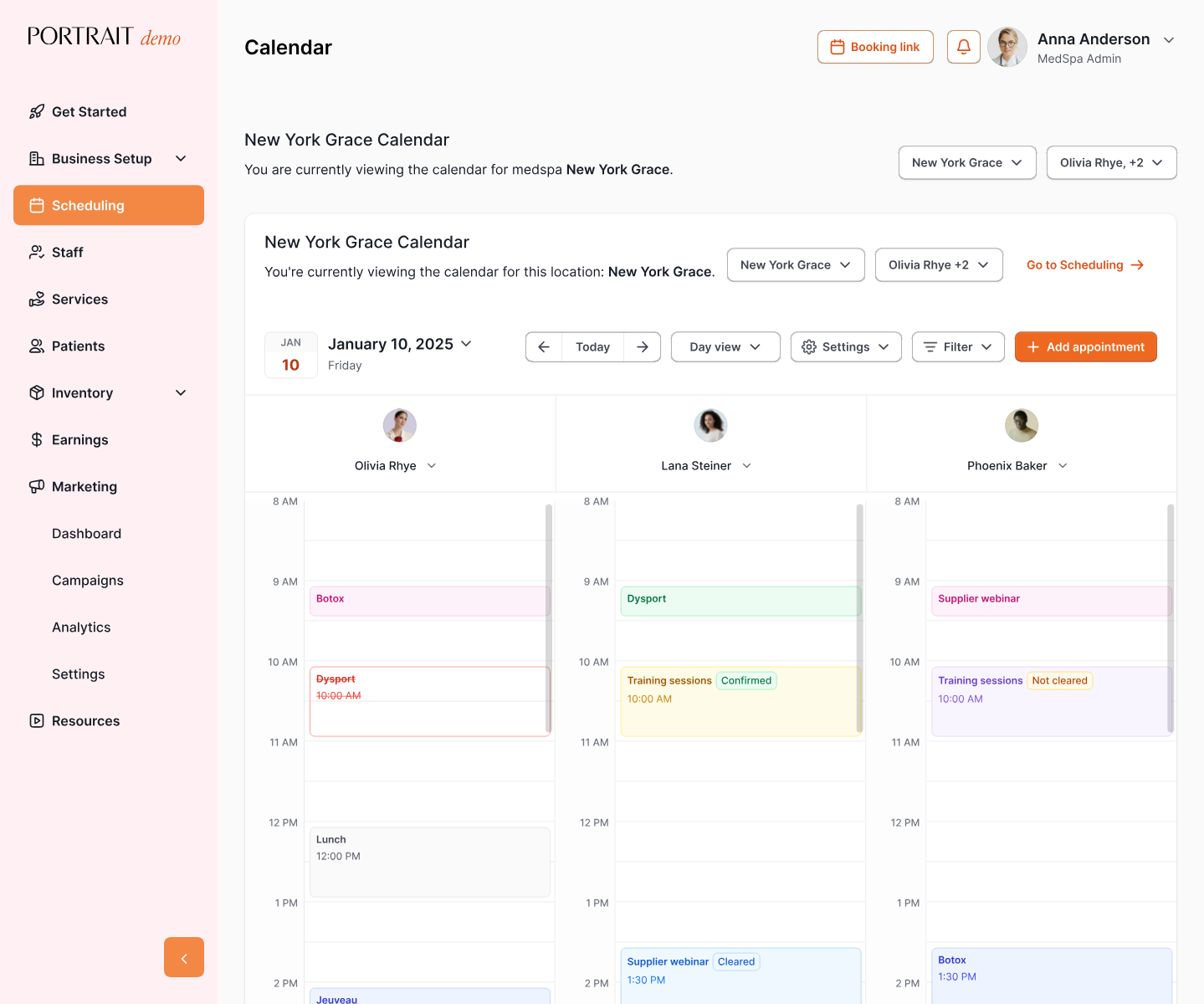



Stay Connected with Portrait Care
Subscribe to our email list and receive the latest insights, updates, and exclusive content delivered straight to your inbox.