Can an RN Own a Medical Spa? [State-by-State Guide]
Knowledge
Oct 22, 2026

Portrait Care Team
Khadija Sukhera
![Can an RN Own a Medical Spa? [State-by-State Guide]](https://cdn.prod.website-files.com/67981e0672f9e49c5b9cb890/6ac0390d930b016ba3923930_6ac03908732d79452f4ac097_6aa2eeb640652bf0c76484d1_can-an-rn-own-a-medical-spa-label.webp)
Empowering Professionals at Every Stage
Portrait offers strategic expertise to help you make informed decisions and achieve long-term success.
Book Intro CallBy Khadija Sukhera, Barrister, Lincoln's Inn · Medically reviewed by Patrick Blake, MD, FAAD · Last updated 2026-09-28
Can an RN own a medical spa? The answer really depends on your state. In some places, you can own the business on your own. Other states require you to have a physician as a business partner or medical director. Some states make it tough for RNs to own a med spa at all.
It's all about your local regulations, so you should check your state's laws before putting any money or effort into starting a med spa. The difference between legal ownership and running into trouble with the law usually comes down to your business structure and whether you've set up the right physician oversight.
Can an RN Own a Medical Spa: The Essential Overview
Whether or not you can own a med spa as a registered nurse comes down to your state's corporate practice of medicine rules. The corporate practice of medicine doctrine tries to keep people who aren’t doctors from making medical decisions or profiting from medical care in ways they shouldn’t.
Most states fall into three main camps:
- Strict CPOM states: Only doctors can own medical practices.
- Independent practice states: Nurse practitioners with full practice authority can own medical practices, but regular RNs usually can't.
- Some flexible states: Non-physicians can be owners if a licensed doctor acts as medical director and oversees everything clinical.
Even if you own the med spa, you still need to work within your RN license. Ownership doesn’t let you go beyond your clinical scope. You still have to follow your nurse practice act.
The procedures you offer will involve medical interventions, which always carry some risks. State regulators want to make sure only qualified and trained people provide these services, always under the right oversight. That’s why these ownership and supervision rules exist.
Understanding State Regulatory Differences
Every state’s medical boards and nursing boards have different rules for med spa ownership. Each state tries to balance keeping patients safe with letting people start businesses, so the laws can be pretty different.
For example, California, Texas, and New York are strict about the corporate practice of medicine. Only doctors can own medical practices in these states. If you're not a doctor, you can own the business side as a Management Service Organization, but only a physician-owned group can do the clinical work.
Florida, Ohio, Washington, and Virginia are more flexible. Non-physicians can own the business, but you’ve got to have a licensed doctor as your medical director. The doctor takes responsibility for everything medical and approves all patient care decisions.
Georgia even lets nurses and doctors co-own a med spa. You don’t have to set up complicated corporate structures here—just make sure you’ve got a licensed doctor as your medical director.
While states like Arizona, Colorado, and Washington usually grant Nurse Practitioners full practice authority, Registered Nurses follow a different set of rules. An RN generally cannot own a medical practice solely because they cannot practice medicine without clinical oversight. This legal concept is called the Corporate Practice of Medicine doctrine. It restricts non-physicians from owning entities that provide medical services. However, you can still open a med spa in specific states that do not enforce this doctrine or have specific exemptions allowing corporate ownership.
In the states where you can open a med spa as an RN, you typically own the business entity while hiring a distinct Medical Director to cover the clinical side. This director oversees medical aesthetic procedures like neurotoxin injections or the use of class II medical devices. You handle the marketing and operations, but the doctor remains responsible for the patient's plan of care. In strict states, you generally cannot own the clinical entity at all. You would need to set up a Management Services Organization to handle the business assets while a physician owns the actual medical corporation.
States Where an RN Can Own a Medical Spa
Here are the states that generally allow an RN (or any layperson) to own a med spa entity, often because they do not strictly enforce the Corporate Practice of Medicine doctrine:
- Alabama
- Alaska
- Arkansas
- Connecticut
- Delaware
- Florida
- Hawaii
- Idaho
- Louisiana
- Maine
- Maryland
- Mississippi
- Missouri
- Montana
- Nebraska
- New Hampshire
- New Mexico
- North Dakota
- Oklahoma
- Rhode Island
- South Dakota
- Utah
- Vermont
- Virginia
- West Virginia
- Wisconsin
- Wyoming
States Where an RN Cannot Own a Med Spa
Here are the states where an RN generally cannot own the medical practice due to strict laws regarding the Corporate Practice of Medicine:
- Arizona
- California
- Colorado
- Georgia
- Illinois
- Indiana
- Iowa
- Kansas
- Kentucky
- Massachusetts
- Michigan
- Minnesota
- Nevada
- New Jersey
- New York
- North Carolina
- Ohio
- Oregon
- Pennsylvania
- South Carolina
- Tennessee
- Texas
- Washington
Core Legal Requirements for RN Ownership
Before owning a med spa as an RN, make sure:
- Your RN license is active and you don't have restrictions or disciplinary actions.
- All the services you want to provide fit within your RN scope of practice.
- You get written protocols for every medical procedure, created and signed by a physician.
- You complete any state-required training, like laser certifications or injectable courses.
- You have proof of professional liability insurance for everyone treating patients and business coverage for your spa.
Most procedures at a med spa—like injectables—require direct physician supervision. Only offer treatments that you’re properly trained for, and stay within your RN scope. Stepping over those boundaries can lead to charges of practicing medicine without a license.
Usually, medical protocols should cover how to do each procedure, patient evaluation, when you need to involve a doctor, and what to do if there’s a complication.
If you want to do laser or energy-based device treatments, many states also require you to complete special training and log supervised clinical hours. Injectable treatments, like neurotoxins or dermal fillers, might need you to show training in facial anatomy, product use, and managing complications.
Your insurer will ask for your protocols and training docs before giving you coverage. Some states even set minimum coverage limits.
Why a Medical Director or Physician Collaborator May Be Required
The medical director is the backbone of your med spa's clinical operations. Your medical director must be a licensed physician and is on the hook legally and clinically for how care is delivered at your facility.
This doctor sets medical protocols, checks in on care quality, reviews charts, and helps manage patient outcomes. Usually, the medical director has to be available for consultation when your spa is open and needs to regularly check your protocols and some of your patient charts.
Finding a good medical director is crucial. You need a clear agreement that details:
- Every provider’s scope of practice
- How the physician supervises and what their oversight includes
- How often the doctor is physically present vs. overseeing things remotely
Some states want the medical director on-site for specific procedures. Others are okay with remote support, as long as you’ve got solid protocols for when to contact the doctor in person.
In places like Florida, the medical director often needs to be board-certified in dermatology or plastic surgery. Other states just want the doctor licensed, but sometimes also require extra aesthetic medicine training.
Your medical director isn't just for compliance. They help with staff training, protocol creation, and patient reviews. A good one keeps your patients safe and your business out of trouble. Work with someone who'll partner with you, not just sign paperwork.
Business Formation and Operational Steps
Your business structure should match your state’s healthcare rules. If you’re in a strict state, you might need two companies:
- A physician-owned professional group for clinical services
- An LLC for business operations you own that handles marketing, staff, and supplies
The management company takes care of things like advertising, paperwork, and equipment. The physician-owned company hires clinical staff and takes medical responsibility. Both work together under a contract that spells out what each one does, with the doctors in charge of medical decisions.
If your state lets non-physicians own the whole business, you can usually set up just an LLC. Some states push for a professional LLC (PLLC), which needs owner-operators to be healthcare professionals.
Your company bylaws or operating agreement should define:
- Who owns what part of the business
- Who gets to make final business decisions
- How doctor oversight fits into operations
Other important documents include:
- Medical director agreement
- Employment contracts for clinical staff, listing supervision and training requirements
- Vendor contracts, making sure your supplies and equipment meet standards
Don’t forget licensing. Some states want your med spa to have its own facility license—others group you under medical or nursing rules. For example, Illinois makes med spas get a special IDFPR license.
Start with HIPAA compliance. Write out privacy rules, train your staff, get agreements with any outside vendors who might see patient data, and keep everything secure—both on paper and online.
Common Pitfalls and How to Avoid Them
The number one reason med spas get in trouble? Scope of practice violations. RNs sometimes do procedures they shouldn't, or let unlicensed staff work on patients. This gets flagged by the nursing boards fast.
Physician oversight can be a weak spot, too. It’s not enough to just pay a doctor to have their name on paperwork. Regulators want to see real involvement—signed protocols, chart reviews, and records of training.
HIPAA fines happen more often than you’d think. Being careless with patient records or using unsecure email can cost you a lot. Make sure you start with HIPAA-compliant software and teach your team not to leave anything out where others can see it.
Never go without proper insurance. You want professional liability for everyone treating patients and business coverage for your whole spa. Some treatments might need extra insurance. Without it, you risk being on the hook personally for lawsuits or injuries.
The rules in your state can be totally unique. Don't just copy what works in another state. Always get an attorney who knows your state's med spa laws before you sign leases or buy equipment.
Marketing can trip you up, too. Don’t exaggerate results, post before-and-after pics without consent, or advertise treatments you’re not licensed to perform. Both your state medical board and federal agencies care about this.
Streamlining Med Spa Operations With the Right Platform
Running a med spa means juggling lots of tools. You’ve got scheduling, electronic health records, payment, supply orders, and messages between staff and patients. The medical spa industry gets complicated fast because the laws keep changing from state to state.
A good all-in-one platform makes life easier. With Portrait, you can do your charting, book appointments, accept payments, and manage inventory all in one place. You don’t need to worry about connecting a bunch of different apps or stress about data leaks.
The real perk is compliance help. Portrait keeps you up-to-date on rules and offers built-in protocols and templates. You can also get legal guidance when you need it.
If you set up your med spa using that MSO-physician group structure, Portrait’s services cover everything from secure communication with doctors to compliance tracking. It’s a major time saver.
Inventory can eat into your profits if you’re not careful. Portrait lets you see how much product you have, tells you when to reorder, and even helps you save money on supplies by connecting you to top manufacturers.
When you’re just starting out, building a patient base is tough. With Portrait’s marketing tools, you can run email and text campaigns, let people book online, and get featured to a big patient network right away. That helps you fill your schedule from day one.
The Final Answer: Can an RN Own a Medical Spa?
If you’re an RN, you can own a med spa in some states, but the steps you’ll take really depend on state law. In states like Florida, Ohio, and Virginia, you can own the business as long as you partner with a proper medical director. In Georgia, you can even co-own the med spa with a doctor. If you’re in California, Texas, or New York, you have to use the MSO model to legally operate.
The best thing you can do? Research your state’s corporate practice of medicine rules and check your nurse practice act. Talk with a healthcare attorney who knows your state’s med spa scene. Connect with other local owners to pick up tips that work in your area.
Don’t let the legal details scare you away. Hundreds of other med spas have done this the right way. Focus on getting the basics right, hire a good medical director, and use software built just for the med spa world.
If you do need a physician as a medical director, look for someone with the right state license and aesthetics experience. Confirm their availability and put supervision responsibilities in writing. Plus, Portrait can help with almost every aspect of opening and operating your med spa. Get started today with Portrait.
Related reading
- Medical Supply Coupon Codes: Get Discounts on Brand Name Supplies
- Galderma Products: Complete Guide for Aesthetic Practices
- Can a Nurse Practitioner Own a Medical Spa?
- Medical Spa Laws and Requirements in Miami
- Medical Spa Laws and Requirements in Atlanta
Save up to 60% on select products
Alongside ownership and licensing considerations, supply costs shape your practice budget. Explore purchasing through Portrait's marketplace, with savings that vary by product and purchasing needs. See your supply pricing.
One Platform.
Everything You Need.
Everything You Need.
Portrait combines the technology, support, and savings to run and scale your modern medical wellness business.
Book Intro Call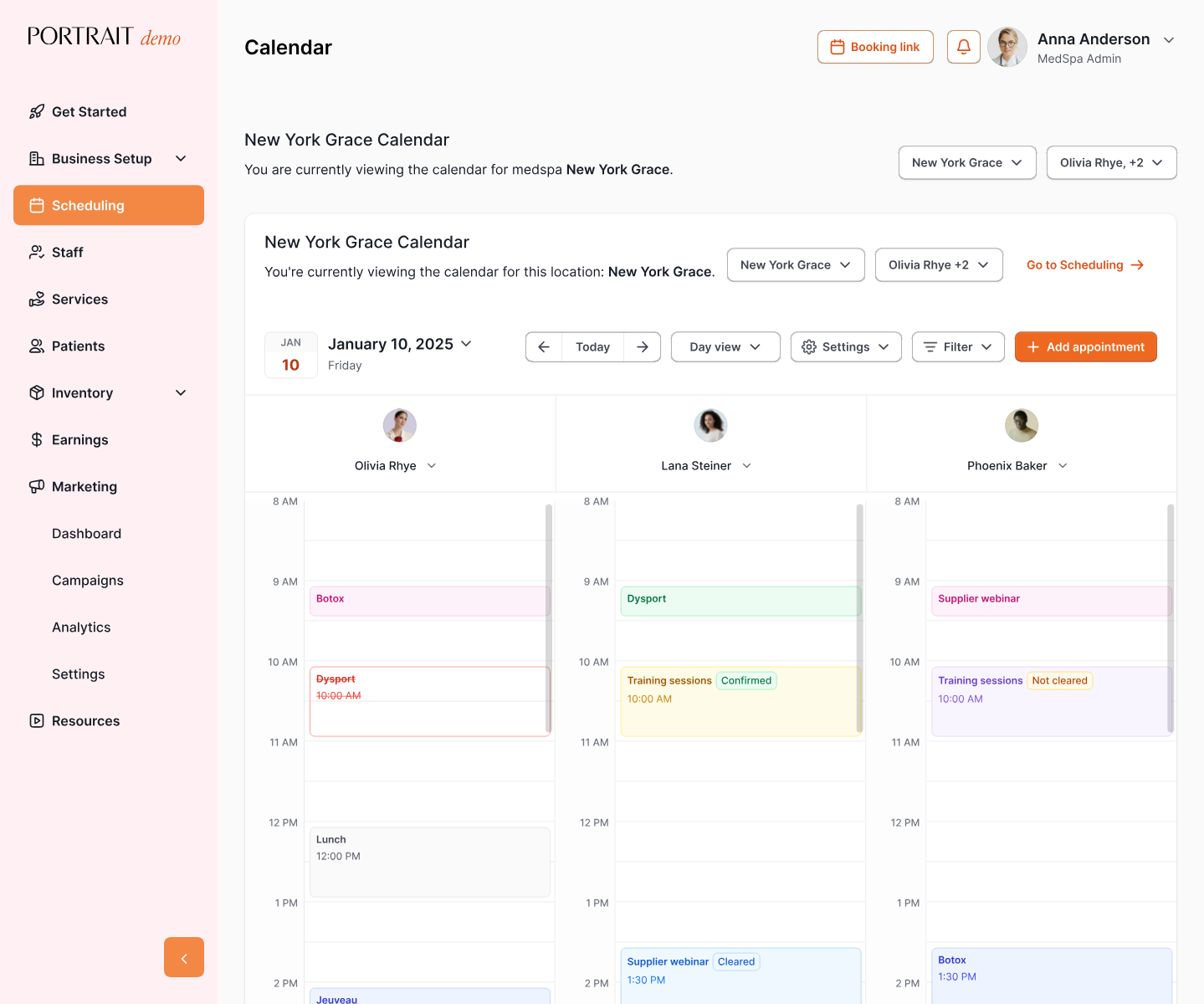

Stay Connected with Portrait Care
Subscribe to our email list and receive the latest insights, updates, and exclusive content delivered straight to your inbox.