The Best Dermatology EHR/EMR Software [2026]
Sep 14, 2026

Portrait Care Team
Natasha Peters
![The Best Dermatology EHR/EMR Software [2026]](https://cdn.prod.website-files.com/67981e0672f9e49c5b9cb890/6aa2f807bf614d31c1da6b1d_6aa2f1315b27cff96370b962_the-best-dermatology-ehremr-software-2026-label.png)
Empowering Professionals at Every Stage
Portrait offers strategic expertise to help you make informed decisions and achieve long-term success.
Book Intro CallIf you want the best dermatology EHR software for 2026, look for tools built for your specialty. The right EHR keeps charting fast, streamlines scheduling and compliance, and makes patient communication a breeze.
The wrong one slows you down, buries you in paperwork, and makes growth harder. See what makes dermatology workflows different and which features aren’t just nice but essential for dermatology clinics.
The EHR/EMR Essentials for Dermatology Practices
Dermatology is all about visuals. You need to document lesions, keep photo records for skin changes, and store before-and-after pictures for procedures. You’re juggling clinical and cosmetic treatment plans every day. General practice EHRs can’t keep up because they’re built for different workflows.
Some common concerns with generic EHR software:
- Charting takes too long and slows down your team.
- High patient volume, so you need fast and organized scheduling.
- You need to manage clinical and cosmetic cases in the same system.
- HIPAA-compliant photo storage.
- Cosmetic billing is tricky and time-consuming.
This is why dermatology EHRs need features like high-res image storage, easy skin change tracking, and workflow tools you won’t find in general EHRs. The right system trims admin time, keeps documentation tight, and lets you focus at the point of care.
How to Evaluate Best Dermatology EHR Software Options
Most EHRs claiming to serve dermatologists aren’t actually built for the job. Here’s what you should check first.
How easy is it to use? If your staff needs weeks to learn the system, it’ll slow you down. Find platforms with simple, intuitive tools and workflows that fit your daily process.
You’ll want:
- Dermatology templates for charting acne, psoriasis, skin cancer screenings, and cosmetic procedures.
- HIPAA compliance with encryption, audit logs, and solid access controls.
- Photo tools for clear image storage and side-by-side views over time.
- Telehealth integration if you do virtual visits.
- Easy reporting so you can track practice stats.
- Helpful vendor support and regular platform updates.
You also need CPT and modifier support. Dermatology billing gets complex with procedural coding, so your software should handle that to prevent claim denials.
Marketing Integration
Patient retention isn’t automatic. If your EHR has built-in marketing tools like automated emails and SMS, you’re ahead of the game. Two-way texting frees up the front desk and increases response rates.
Choose a platform that keeps patient communication with charting and scheduling. Fewer tools means fewer mistakes and less work switching between systems.
Scalability and Data Management
If you plan to grow, your EHR should keep up. Look for multi-location support, centralized reporting, and easy inventory tracking. This stuff matters when you open a second site or add more providers.
Think about data migration before you make the leap. Moving clinical notes and high-res medical images is messy without a good migration process. Make sure your new vendor transfers your historical data cleanly, including image metadata.
Key Elements of a Dermatology-Focused Workflow
The best dermatology EHR software should fit your clinical and day-to-day workflows, not force you to adapt.
- Visual documentation tools for before-and-after photos and annotation. You need these for lesion tracking, treatment planning, and evaluating cosmetic outcomes.
- Automated follow-up scheduling. The system should handle rebooking for routine skin checks or post-procedure follow-ups without manual calls by staff.
- Membership and package tools to track treatment series and keep your aesthetics patients engaged. These give you a clear edge.
These aren’t extras. You use them every day in your practice, so they should be built into your EHR.
Ensuring Security and Compliance in Dermatology
Your patients trust you with sensitive data: clinical photos, detailed cosmetic records, procedure docs. Regulatory oversight is only getting tighter, and breaches get expensive.
Your EHR should cover these basics:
- Role-based access so only the right staff see the right info.
- Encryption for data, both at rest and in transit.
- Audit logs for every chart access and update.
- Session timeouts to prevent snooping on unattended terminals.
Compliance isn’t just about data security. If you operate with a medical director or do Good Faith Exams, your EHR should support those workflows and help with oversight documentation.
How Portrait’s Solutions Support Dermatology Clinics
Portrait brings everything you need into one simple system: EHR, scheduling, payments, CRM, and inventory all in one place. Here’s what that looks like for a dermatology clinic.
- Scheduling and payments: AI scheduling checks provider calendars, books the right treatment time, and auto-sends reminders. Patients can schedule online. Payments are CPOM-compliant and part of the treatment flow.
- Patient management: Track every visit, preference, and treatment inside the platform’s CRM. Automated reminders and texting run right alongside charting, so you’re not jumping tabs or keeping a manual follow-up list.
- Clinical documentation: Use templates made for aesthetics, secure HIPAA photo storage, and forms that attach right to each patient’s chart. Treatment notes are fast and flow right into the visit.
- Marketing and operations: Portrait acts like a marketing agency that happens to be a software provider. Get website help, SEO, paid ads, social media, and patient automations all in one platform. That’s huge for growing the cosmetic side of your business.
- Medical oversight and compliance: With Good Faith Exam documentation, and protocol management, you stay compliant without building new admin systems.
- Scalability: Manage multiple locations with a single login. Updates come every two weeks, so you’re always running the latest tools.
Pricing stays simple. You pay nothing for up to 50 patients. It’s $99 per location per month above that. There’s no revenue share or surprise fees.
Accelerating Growth with Supply Discounts
Aesthetic supplies hit your bottom line hard. Injectables, fillers, skincare, and devices all add up. Portrait’s Marketplace gives you access to up to 60% on select products, all ordered straight from the marketplace. Inventory updates itself after each treatment, so you won’t lose track.
The Portrait Rewards Program puts money back in your practice. Half your savings slash costs right at checkout. The other half stacks up as rebate points for future orders. You start at Bronze with exclusive prices immediately.
Those supply savings let you reinvest in staff, marketing, or new equipment instead of losing it to overhead.
Take the Next Step with the Right Dermatology EHR Software
The difference between clinics running old tools and those using integrated platforms is obvious. You’ll see it in faster charting, better patient retention, smoother billing, and happier staff.
If you’re choosing the best dermatology EHR software this year, focus on workflows built for dermatology, compliance, built-in patient engagement, and scalability. Portrait covers all those bases plus brings real supply savings and marketing power.
Whether you’re opening your first location or scaling up, Portrait gives you the practical tools to focus on patient care and grow your business. Book an intro call to see how Portrait can work for your practice.
Savings vary by practice, product mix, and order volume. Figures reflect select products and are not guaranteed.
Related reading
One Platform.
Everything You Need.
Everything You Need.
Portrait combines the technology, support, and savings to run and scale your modern medical wellness business.
Book Intro Call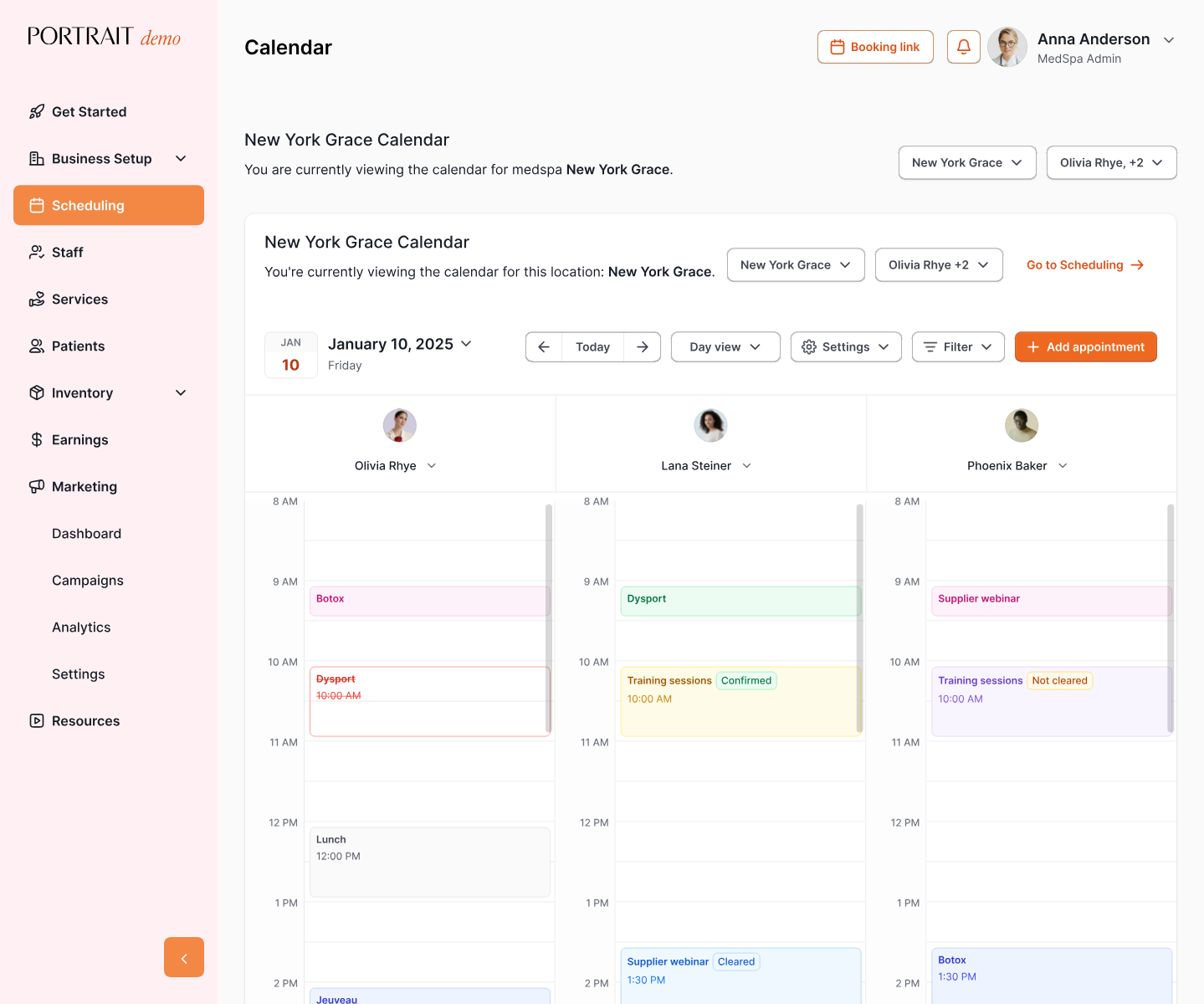



Stay Connected with Portrait Care
Subscribe to our email list and receive the latest insights, updates, and exclusive content delivered straight to your inbox.