Empowering Professionals at Every Stage
Portrait offers strategic expertise to help you make informed decisions and achieve long-term success.
Book Intro CallIf you run a med spa and want to offer peptides, how you source them will make or break your results and your margins. Sourcing reputable peptides keeps patients safe and protects your license, while saving you money in the long run. Get this wrong, and you'll risk patients, profits, and possibly even your practice.
This guide gives you exactly what you need to know: how to source peptides the right way, red flags to avoid, how to vet a supplier, and ways to save money without cutting corners. Let's get right to it, so you can start securing safe, cost-effective supplies.
Why Peptide Sourcing Matters for Med Spa Profitability and Safety
Peptides touch every area of your business: clinical care, compliance, daily operations, and COGS. One mistake and it all unravels. Poor-quality products mean inconsistent outcomes and patient complaints. When documentation is missing, audit risk jumps. If you work with shady vendors, your per-unit cost creeps up fast. Sourcing the wrong stuff could even get the whole clinic shut down.
If you set up peptide sourcing right, you shield yourself from regulatory headaches, patient complaints, and wasted spend. Wholesale peptides boost profits fast when your sources are legit.
Peptides Aren't Just Another Supply
You can't treat peptides like skincare or syringes. They need prescription workflows, cold-chain handling, full clinical protocols, and a medical director's sign-off. Store them the wrong way or skip documentation, and you could lose much more than inventory. Before any vial arrives, make sure your medical director, practice manager, and compliance advisor are on the same page about sourcing and handling.
Lower Cost Isn't Worth Lower Standards
Margins matter. Supply costs can swallow up half your revenue if you aren't careful. Cut costs the right way with bulk purchases, fewer vendors, and less waste. Never chase cheap vials online. As you'll see in our BPC-157 sourcing guide, you get what you pay for with peptides. Safe savings come from discipline, not from shortcuts.
How to Vet a Peptide Supplier for Your Med Spa
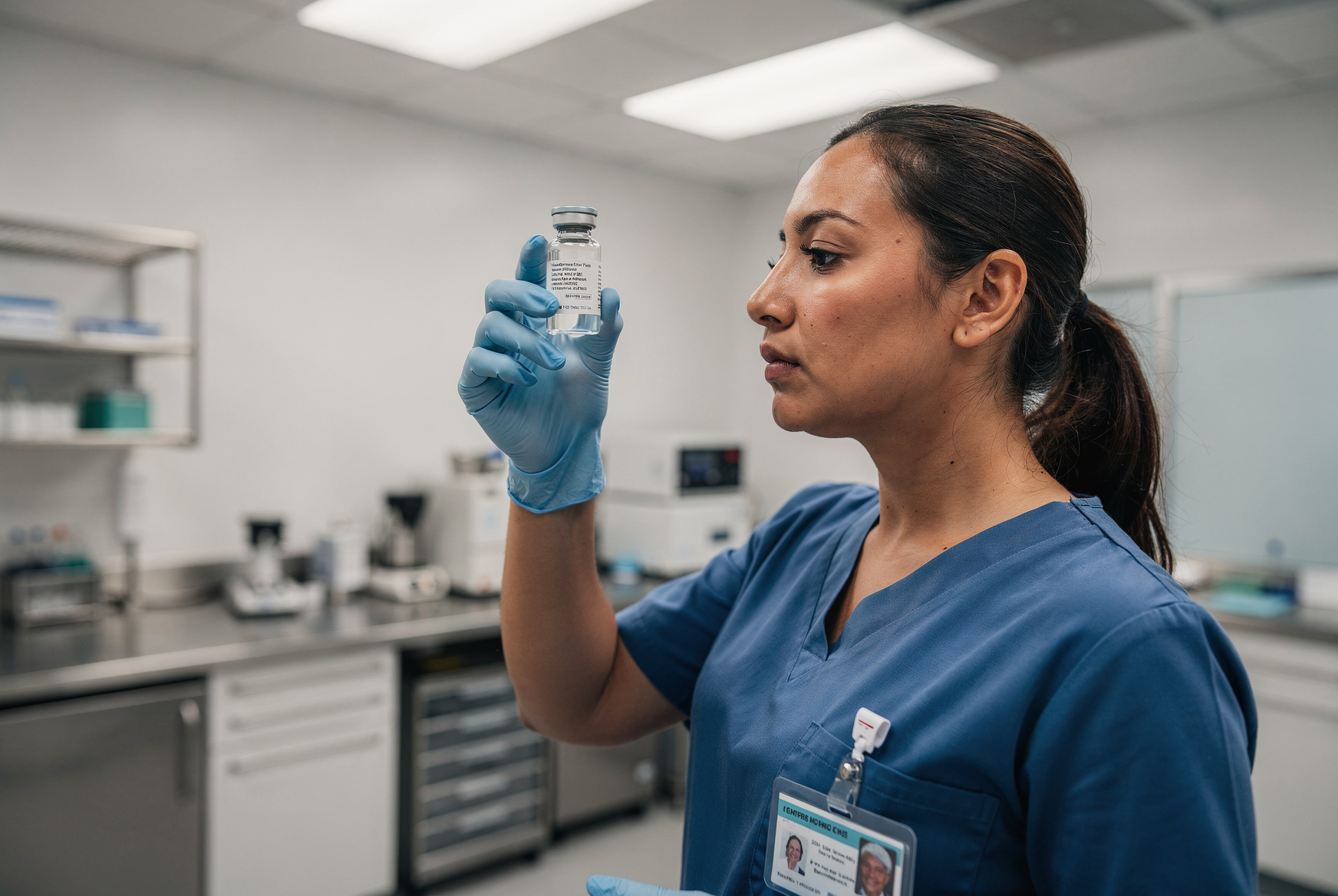
Vetting a peptide supplier is a real due diligence process. Don't just scroll Google and order what pops up. Before bringing in a new peptide, make sure your team can answer questions about the vendor's licenses, documentation, shipping process, and support team. Here's what to check:
- Verify Licensing and Credentials: Use licensed compounding pharmacies or vetted medical platforms. Ask for FDA Registration Number, GMP Certificate, and PCAB accreditation. LegitScript is a good sign, too. Walk away if the vendor hesitates or can't provide proof. Your medical director should confirm everything matches your state's rules.
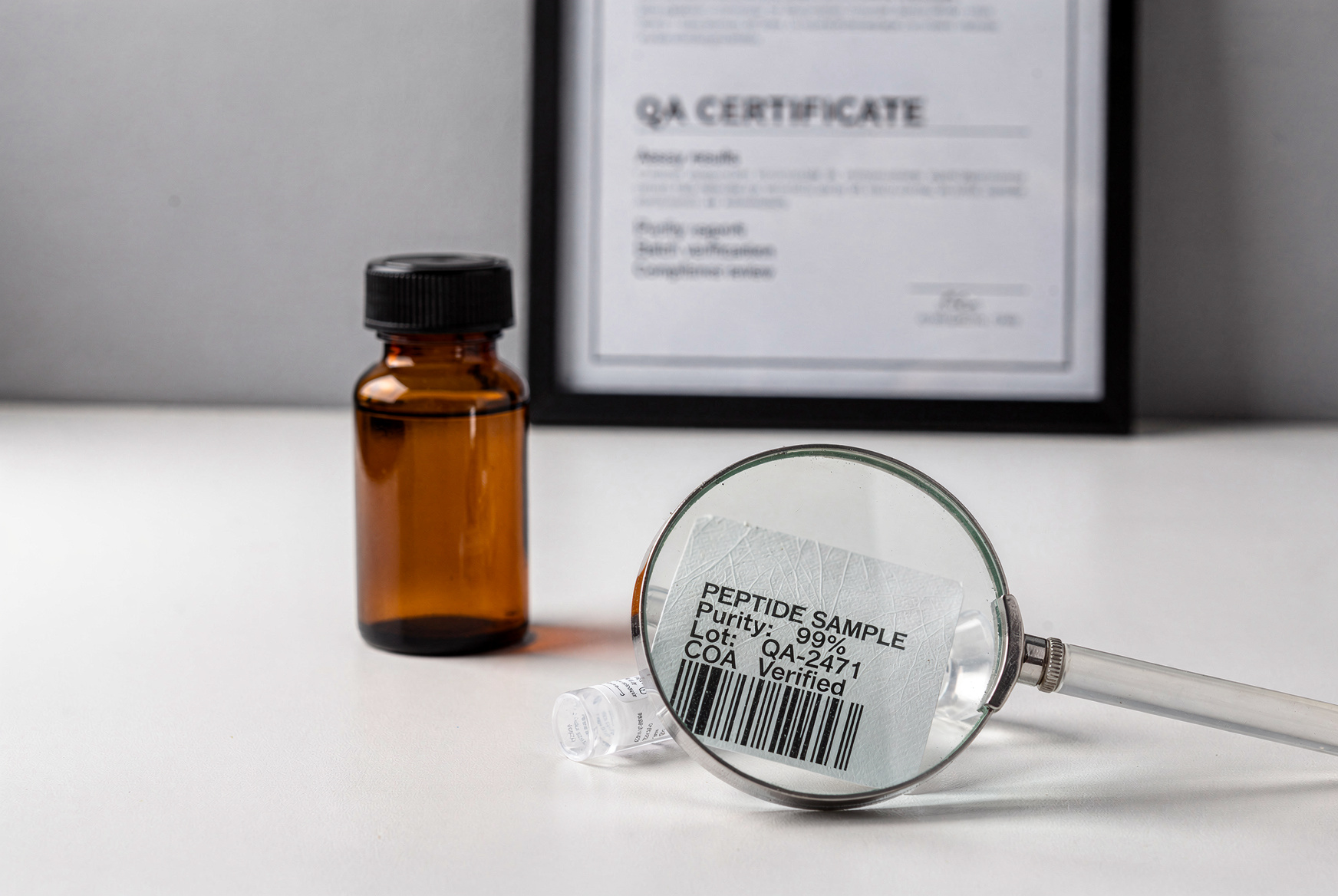
- Ask About Quality Documentation: A Certificate of Analysis (COA) is a must. Only accept batch-specific COAs from ISO 17025-accredited labs. For injectables, look for at least 98% purity using HPLC, sterility data, and endotoxin levels under 0.05 EU/mL. Be wary of any COA that shows 100% purity—it's almost never real. Ignore vague, undated, or in-house-only results. Our TB-500 sourcing guide explains how to check a COA on the lab's site. If you can't verify it, don't buy.
- Check Storage, Shipping, and Cold Chain: Many peptides break down quickly with heat, light, or moisture. Lyophilized vials should be stored at -20°C or colder. Once reconstituted, keep them 2-8°C in the fridge, with a 28-day shelf life. Ask the supplier about cold shipping, packaging, and what happens if shipments are delayed or arrive warm. Move products to the right storage as soon as they arrive.
- Review Ordering and Support: Ordering needs to be easy. You want clear invoices, order history, and support you can actually reach. A vendor who disappears after purchase will cost you time and money.
Red Flags to Avoid When Buying Peptides
Some suppliers look tempting with low prices and fast delivery. But there are clear warning signs you shouldn't ignore.
- "Research Use Only" Products: If it's labeled "for research use only," it's not approved for human use. Unregulated for safety or purity and inconsistent dosing. Many clinics have faced major fines or worse for using these. Regulators watch for it. Don't risk your license on these products.
- Unclear Origin or Missing Docs: Can't get the manufacturing origin, a lot-specific COA, or traceability? Walk away. Missing or vague documentation is a legal and clinical risk you can't fix later.
- Unrealistic Prices: If prices sound too good to be true, they probably are. It means low-quality, research-grade, or strange sourcing. It's smarter to use purchasing networks to get reasonable, but real, pricing.
- No Support: You need a point of contact for questions. If vendors vanish after you buy, it's not worth the risk or hassle.
Compliance Considerations Before Adding Peptides to Your Menu
Even the best sourcing isn't enough. Your clinic needs the right systems in place for safe, compliant peptide therapy. That means set protocols, good patient screening, formal workflows, and airtight records.
The FDA is looking more closely at med spas every year. Dozens of warning letters went out in 2024 and 2025. The Ohio Board of Pharmacy suspended over 30 med spas in 2025, mostly over the wrong peptides or bad workflows. This is a real risk, not a "what if?" scenario.
Stay Aligned With Your Medical Director
Your medical director should help choose which peptides you offer, how you screen patients, and what paperwork you need at each step. In most states, you can't run a peptide program without one. Their job doesn't stop at oversight; they coordinate pharmacy, set up workflow, and keep protocols locked in.
Document Patient Eligibility
Make sure every peptide patient has a full intake, medical history review, contraindication screening, and informed consent. Write down dose, administration details, and progress in your EHR. Solid records keep your clinic covered and protect patient safety.
Know Your State’s Rules
Rules for prescribing, handling meds, ownership, and delegation change by state. Some restrict certain peptides entirely. Some states have special pharmacy board requirements about medication handling. Double-check workflows with compliance advisors and medical leadership before rolling out any new peptide treatment.
Smart Ways to Save on Peptides Without Risk
You can absolutely save money on peptides and keep your standards rock-solid. The trick? Lean into efficiency and group purchasing, not cut-rate products.
Consolidate Your Purchasing
Ordering from lots of vendors is a time suck and bumps up your per-unit prices. When you stick with a few trusted suppliers, you score better pricing, easier reorders, and clearer tracking. Our wholesale peptides guide goes deeper here, since fragmentation is a profit killer.
Track Service Line Usage
Know what peptide services your patients are actually booking and how fast you go through inventory. Slow movers tie up cash and up your risk for expired product. Stay on top of usage by service line and you won't waste money on dead stock.
Set Par Levels and Reorder Points
Par levels tell you the lowest stock you can hit before it's time to reorder. Base yours on average weekly use, how long your vendor takes to deliver, and add a buffer for busy weeks. That way, you won't run out, but you also won't overstock. With a good system, clinics can slash expired product by 40%-60%, that's huge savings for pharmaceutical-grade products.
Bundle Supplies for Bigger Savings
Peptides are just one line item. When you group injectables, GLP-1s, HRT, IV/IM, skincare, and devices into the same strategy, the savings add up. Even a 10% cut across the board gives you cash for marketing, hiring, or other growth plays.
Questions to Ask Before Your Next Peptide Order
Use this list to make sure you're covered before you order peptides from any vendor.
- Quality and Legitimacy: Is this a licensed compounding pharmacy or vetted medical platform? Got real, batch-specific COAs from an outside lab? Do the COAs show proper purity, sterility, and endotoxin results? Is every vial labeled with lot number and expiration? Is this actually for clinical use (not research only)? Can you trace the whole path from manufacturer to clinic?
- Operations and Fulfillment: How's cold-chain shipping handled? What happens if an order is delayed or arrives warm? Can you reorder quickly? Are the invoices and order histories clear? Is there real support you can talk to if something goes wrong?
- Cost and Margins: What's the true landed cost per unit including shipping? Are there buy-in tiers or minimum orders? How much product do you toss every quarter because it expires? Is the pricing in line with what you'd expect to pay for real pharmaceutical products? Any rebate or perks for volume?
How Portrait Helps Med Spas Save and Run Lean
Portrait makes supply savings straightforward for med spas through a big national supplier network. You can save up to 60% on over 2,000 compliant products, including peptides, GLP-1s, HRT, IV/IM, injectables, devices, skincare, you name it. It's all in one marketplace, so you're not juggling loads of vendors or fighting to keep invoices straight.
Order every supply in one spot and get bulk pricing you'd normally miss as a small clinic. Portrait Rewards is simple: get half your savings instantly and the rest as rebate points for future orders. The more you buy, the more you keep. Inventory management plugs right into your EHR. As you treat patients, your counts update automatically. You get reorder alerts, which means no scrambling when you nearly run out or losing money on expired stock.
Plus, Portrait gives you medical director oversight and compliance support. There's a network of licensed Medical Directors ready to support peptide programs. You get the backing and records your regulators and insurance want to see. No revenue share. No locked contracts. And the software keeps getting better every couple of weeks.
Build a Peptide Program That Protects Patients and Cash Flow
The clinics that win with peptides aren't chasing the cheapest deals. They pick the right suppliers, follow clear protocols, stay close with their medical director, and manage purchasing as a tight system. It keeps patients safe, margins solid, and regulators happy.
If your process feels messy or hard to track—if vendors are inconsistent or you can't always prove where things come from—this is the time to tighten up. A good supplier is key, but so is the right operational setup. That means strong inventory controls, good clinical workflows, and a connected platform. See how Portrait can help you lock in savings, keep orders smooth, and run your clinic from one place.
One Platform.
Everything You Need.
Everything You Need.
Portrait combines the technology, support, and savings to run and scale your modern medical wellness business.
Book Intro Call

Stay Connected with Portrait Care
Subscribe to our email list and receive the latest insights, updates, and exclusive content delivered straight to your inbox.