Medical Spa Laws and Requirements in North Carolina
Sep 17, 2026

Portrait Care Team
The Portrait Team
Empowering Professionals at Every Stage
Portrait offers strategic expertise to help you make informed decisions and achieve long-term success.
Book Intro CallIn North Carolina, a medical spa is defined as a licensed healthcare facility offering non-surgical aesthetic treatments, which must be owned by a licensed physician. To help you run a compliant and successful clinic, this guide covers the key legal requirements for medical spas in the state.
How Medical Spa Laws Work in North Carolina
Understanding the medical spa laws in North Carolina begins with a key distinction: a medical spa provides medical treatments, while a day spa does not. Because services like cosmetic injections and laser therapies are considered medical procedures, they are subject to specific med spa regulations that do not apply to traditional spas. This framework directly impacts everything from who can open a med spa to daily operational compliance.
These rules are in place to protect patients, requiring that all medical services are performed or supervised by qualified, licensed professionals. In North Carolina, oversight comes from a few key agencies that regulate the different providers within your clinic. The main governing bodies are the North Carolina Medical Board, the North Carolina Board of Nursing, and the North Carolina Board of Cosmetic Art Examiners.
Medical Spa Requirements in North Carolina
To help you build a compliant and successful practice, we will cover the core Medical Spa Requirements in North Carolina. The state’s medical spa laws are built on the corporate practice of medicine doctrine, which dictates who can own a med spa—strictly licensed physicians or specific provider partnerships. These med spa regulations also define supervision duties and staff scope of practice, which are fundamental for maintaining med spa compliance and operational integrity.
Medical Spa Ownership & Business Structure Requirements in North Carolina
The medical spa laws in North Carolina strictly enforce the Corporate Practice of Medicine (CPOM) doctrine, which directly answers the question of who can own a med spa. Due to these med spa regulations, ownership is restricted to licensed physicians or specific partnerships between physicians and physician assistants or nurse practitioners. This means non-physicians are prohibited from having a direct ownership stake in the medical practice itself.
For non-physicians exploring how to participate, the Management Services Organization (MSO) model provides a compliant path. Through an MSO, a non-physician can manage the business aspects of the clinic, such as marketing and staffing, while the medical practice remains physician-owned. The medical practice must be structured as a professional entity, such as a Professional Corporation (PC) or Professional Limited Liability Company (PLLC), to maintain med spa compliance.
A key part of the Medical Spa Requirements in North Carolina is appointing a medical director. This role must be filled by a licensed physician who is actively involved in the spa's operations and supervises all clinical staff and procedures. This oversight is often formalized through collaboration agreements to ensure all services at spas in North Carolina meet state standards.
Facility, Licensing, and Compliance Requirements in North Carolina
To operate, you must secure a medical spa license North Carolina requires from the North Carolina Medical Board. While specific facility permits are not required and spas are not routinely inspected, you will still need to complete standard local business registrations. These initial steps are foundational to understanding how to open a med spa in North Carolina correctly.
Achieving med spa compliance also means adhering to safety and privacy standards, as providers are regulated by their respective boards. This includes following general rules for infection control, sanitation, OSHA, and HIPAA that apply to all medical settings. Our platform helps you manage these operational duties with confidence.
The med spa regulations North Carolina has in place also extend to how you market your services. Additionally, while specific insurance mandates are not outlined in the state's medical spa laws, carrying robust malpractice and general liability coverage is a critical business safeguard. Proper planning in these areas protects your investment and ensures long-term success.
Who Can Perform Medical Spa Procedures in North Carolina?
In North Carolina, many popular services like injectables are considered medical treatments, which dictates who can perform them. According to the state's med spa regulations, only a licensed physician, physician assistant, or nurse practitioner can prescribe neurotoxins and fillers. Registered nurses may administer these injections, but they must do so under the supervision of the prescribing provider.
The rules for other procedures vary based on the service. For cosmetic laser treatments, a physician may perform the service or delegate it to a properly trained and supervised individual, according to state guidance. Microneedling, on the other hand, falls within the scope of practice for licensed aestheticians.
For other services like IV hydration, the medical spa laws in North Carolina are less defined, meaning they fall under general medical oversight. A physician medical director must supervise all medical procedures to meet the Medical Spa Requirements North Carolina sets for patient safety and med spa compliance. While specific training mandates are not broadly outlined, the supervising physician is ultimately responsible for confirming staff competency for all delegated tasks.
Laser & Energy Device Regulations in North Carolina
North Carolina’s medical spa laws do not offer a specific legal definition for lasers or energy devices, but they do regulate procedures like cosmetic laser services. This ambiguity highlights the importance of physician oversight to maintain med spa compliance for spas in North Carolina. The supervising physician is responsible for determining which devices and treatments fall under the practice of medicine.
According to state guidance, a physician may perform laser procedures or delegate them to a properly trained individual under their supervision. The state does not mandate specific certifications or registration for laser technicians, placing the full responsibility on the medical director to verify competency. Similarly, clear rules for adverse event reporting are not defined, making robust internal protocols a critical component of the medical spa requirements North Carolina expects you to follow.
Medical Spa Enforcement, Penalties & Risk Management in North Carolina
Failing to adhere to the medical spa laws in North Carolina can lead to serious consequences, as state boards actively enforce these rules to protect public safety. Violations of the med spa regulations can result in enforcement actions ranging from cease-and-desist orders and substantial fines to professional discipline, including the suspension or revocation of a provider's license. Understanding these risks is a key part of maintaining long-term med spa compliance for all spas in North Carolina.
To help you operate confidently, it’s important to recognize common mistakes that attract regulatory attention. Here are some of the most frequent issues:
- Improper delegation of medical tasks to unqualified staff
- Misleading advertising that makes unsubstantiated claims or violates board rules
- Engaging in the unlicensed practice of medicine, which can relate to questions of who can own a med spa
Proactive risk management is your best defense against penalties. Here are some practical steps for staying compliant with the medical spa requirements North Carolina has in place:
- Regular Compliance Audits: Periodically review your operations against current med spa regulations to identify and correct potential issues before they become problems.
- Comprehensive Staff Training: Ensure every team member understands their scope of practice and receives documented training on all procedures they perform.
- Meticulous Documentation: Maintain detailed records of patient consents, treatment plans, delegated tasks, and supervisory oversight to demonstrate a history of compliance.
Stay Compliant with Portrait Care in North Carolina
Operating a successful medical spa in North Carolina requires careful attention to its specific legal framework. As we've covered, this includes strict physician-only ownership rules under the Corporate Practice of Medicine doctrine, the mandatory appointment of a medical director, and clear guidelines on who can perform medical aesthetic procedures. By managing staff delegation, maintaining detailed records, and conducting regular internal audits, you can build a practice founded on safety and compliance.
This article is for informational purposes only and does not constitute legal advice. We strongly encourage you to consult with a qualified healthcare attorney to address your specific circumstances.
Building a compliant practice from the ground up is a detailed process, but you don't have to do it alone. To get started, you can learn more about opening a compliant med spa with our detailed guide. When you're ready to see how our all-in-one platform can support your clinic's growth and operational needs, schedule a demo with us today.
Related reading
- Botox Cost Per Unit in 2026: A Clinic Owner's Guide to Pricing and Margins
- Letybo Price: How to Get Letybo for a Lower Price
- Medical Spa Laws and Requirements in Oakland
- Medical Spa Laws and Requirements in Raleigh
Frequently Asked Questions
Who can own a med spa in North Carolina?
North Carolina generally restricts medical practice ownership to licensed physicians or specific physician partnerships with physician assistants or nurse practitioners. Non-physicians can participate in administrative operations through a management services organization, while the medical practice uses a professional entity. Confirm current requirements for any proposed partnership with your state board.
Can an RN give injections at a med spa in North Carolina?
Yes, registered nurses may administer neurotoxin and filler injections in North Carolina under the supervision of the prescribing provider. The article identifies physicians, physician assistants, and nurse practitioners as the professionals who may prescribe those treatments. Your state board is the authority on current scope and supervision requirements.
Does a med spa need a medical director in North Carolina?
Yes, a North Carolina med spa generally needs a licensed physician medical director who actively supervises clinical staff and procedures. Oversight is often documented through collaboration agreements, with the director involved in the practice rather than holding only a title. Confirm current requirements for your clinical team with your state board.
What licenses do I need to open a med spa in North Carolina?
The article identifies licensing through the North Carolina Medical Board and standard local business registrations as steps for opening a med spa. It states that specific facility permits are not required, but professional oversight still applies. Confirm current requirements with the board and your local municipality for your planned practice.
What safety and privacy rules apply to a med spa in North Carolina?
North Carolina med spas generally follow infection control, sanitation, OSHA, and HIPAA standards that apply to medical settings. Your providers also remain accountable to their respective professional boards, so operational compliance includes both workplace practices and patient privacy. Confirm current requirements for the services and professionals in your practice.
For an overview of all 50 states, our medical spa laws by state directory includes North Carolina and every other state.
One Platform.
Everything You Need.
Everything You Need.
Portrait combines the technology, support, and savings to run and scale your modern medical wellness business.
Book Intro Call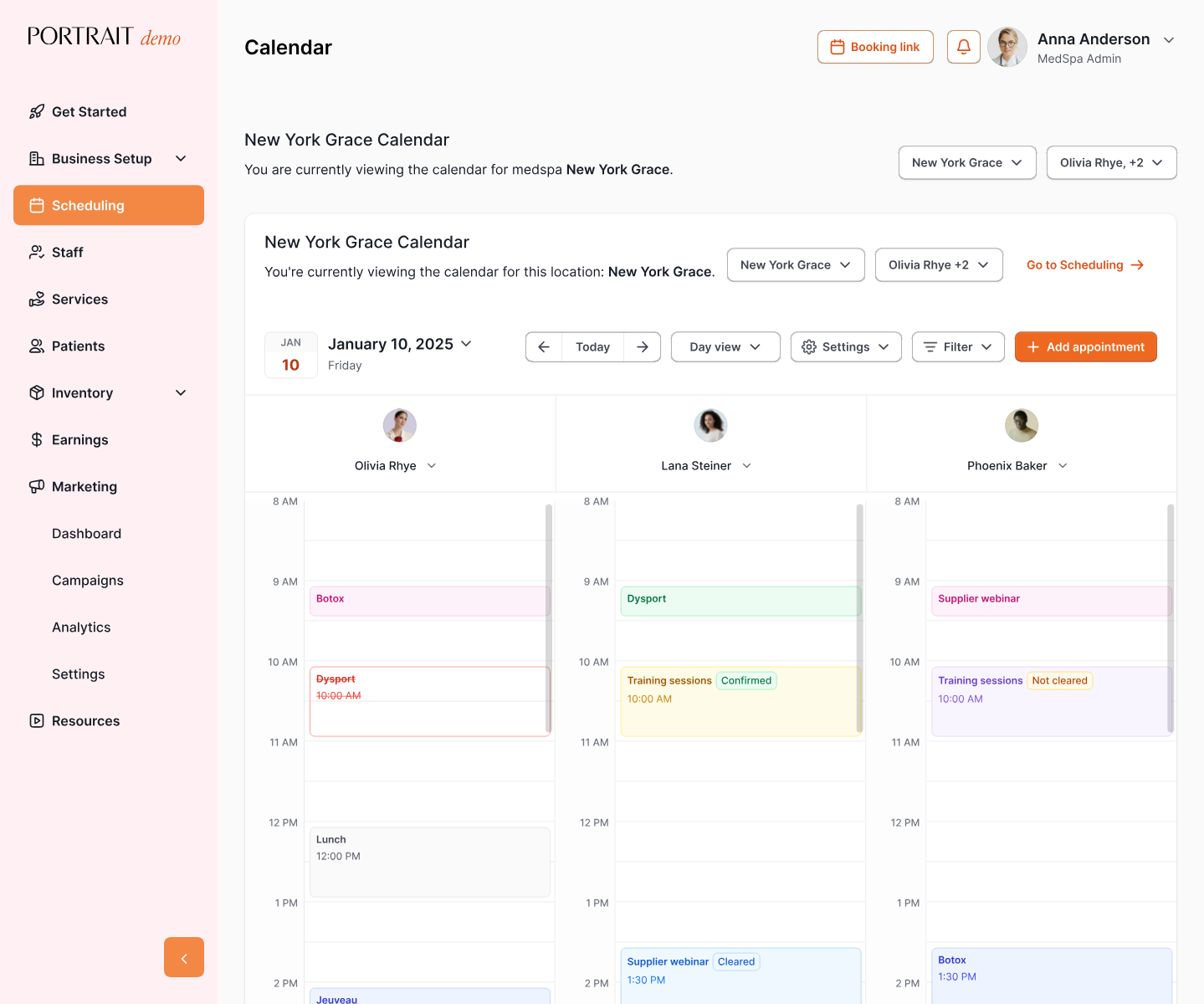



Stay Connected with Portrait Care
Subscribe to our email list and receive the latest insights, updates, and exclusive content delivered straight to your inbox.