Empowering Professionals at Every Stage
Portrait offers strategic expertise to help you make informed decisions and achieve long-term success.
Book Intro CallTo reduce med spa supply costs, start with what you order, what you use, and what remains on the shelf. Review those records before changing products patients trust.
Use the monthly routine below to examine inventory, purchasing terms, and treatment pricing. Keep provider input part of decisions about product selection and use.
How much of a med spa's spending goes to supplies?
AmSpa's 2024 Medical Spa State of the Industry Report estimates that cost of goods sold was 29% of 2023 expenses. This estimate describes a share of expenses, not revenue, and is not a benchmark or target. The report's public overview is available in the AmSpa industry report recap (opens in a new tab).
Using AmSpa's 2024 report averages, the arithmetic is: 29% of expenses × $869,572 in annual expenses = approx $252,000 in product cost. Dividing that amount by $1,398,833 in annual revenue gives approx 18% of revenue. Both annual averages describe 2023.
That revenue percentage is a derived comparison using reported averages, not a separately reported finding or a target for your practice. AmSpa's revenue average combines single-location and multi-location businesses. Compare your own product cost and revenue for matching months before deciding whether spending needs attention.
Keep the comparison consistent. Label whether your supply total reflects purchases during the month or product used during that month. Review remaining stock alongside purchases so you can distinguish inventory on hand from products used in treatments.
For the broader relationship between revenue, expenses, and owner income, see our guide to profit margins and owner take-home. Use that context alongside your supply review, rather than judging practice performance from product spending alone.
What should you check in a monthly supply review?
Check product overlap, ordering, unused stock, delivery charges, supplier terms, and treatment pricing against the same month's records.
Choose a regular monthly review date and assign someone to gather invoices, inventory records, and treatment activity. Ask the people ordering and using supplies to explain differences between the records and the shelves.
Work through the same checks each month. Record the issue, the proposed action, and who will follow up. At the next review, check whether the action happened and whether the underlying issue remains.
Keep purchasing questions specific: Was this product needed? Was an order already pending? Did the clinic use what it expected? Use those answers to choose the next action.
How do you audit supply spend?
Audit supply spend by matching invoices to treatment activity and checking the stock that remains.
- Pull three months of invoices by category. Separate neuromodulators, dermal fillers, biostimulators, skincare, and consumables where relevant. Record quantities, product charges, shipping, and invoice dates.
- Match usage to booked treatments. Review booking records alongside completed treatment records and product-use entries. Flag gaps for staff review rather than assuming every booking consumed product.
- List slow movers. Note products still on the shelf and compare them with recorded use. Ask providers whether they expect to use the remaining stock.
- Find duplicate products. Identify products purchased for similar purposes, then ask providers why each remains on the order list. Treat overlap as a review question.
- Check expiry dates. Record which stock needs attention before the next order. Review opened products separately and follow applicable product instructions.
Keep the audit traceable to the original records. For each item needing attention, save the invoice reference, inventory entry, and explanation from the person responsible.
Separate missing information from confirmed waste. An unexplained inventory difference needs investigation before you classify it as expired stock, excess purchasing, or unrecorded use.
Finish with a short action list. You might pause an overlapping order, correct a stock record, or ask a supplier to clarify a charge. Give each action an owner and revisit it during the next monthly review.
How do you cut waste without cutting quality?
Start with reorder points, expiry checks, provider-reviewed protocols, and opened-product records before considering product substitutions.
Set reorder points from your own usage
Choose a stock level that prompts an ordering review for each regularly used product. Base that decision on recorded use, upcoming treatments, and expected delivery timing.
Check outstanding orders before placing another order. Revisit the reorder point when your treatment mix or ordering pattern changes. Avoid treating a previous month's order quantity as an automatic instruction to buy it again.
Use first-expiring-first-out checks
Arrange eligible stock so staff can identify the earliest expiry dates before selecting products. Keep expiry information visible during stock counts and purchasing reviews.
Follow product storage and use instructions when organizing inventory. First-expiring-first-out is an inventory routine, not permission to use expired products or disregard handling requirements.
Review standard protocols with providers
Ask providers to review the supplies recorded for each treatment and explain appropriate differences in use. Document agreed routines for preparing supplies and recording what was used.
Keep purchasing decisions separate from clinical decisions. Do not set product-use limits solely to meet a spending target. Ask providers to assess any proposed change to products or treatment supplies.
Track opened product separately
Record when a product is opened and distinguish opened quantities from unopened stock. Follow the product's instructions for storage and use after opening.
Include discarded product and the reason for disposal in your monthly review. Use that record to question order quantities and purchasing frequency, without extending product use beyond its instructions.
How should you negotiate with suppliers?
Ask suppliers for written terms covering volume, payment timing, bundling, and shipping, and purchase through authorized channels only.
Prepare your recent purchasing records before the conversation. Describe what your clinic actually orders and uses. Avoid committing to quantities based only on a purchasing threshold.
- Volume: Ask whether pricing depends on order quantity or purchasing commitments. Request the terms in writing and compare them with your recorded usage.
- Payment timing: Ask when payment is due and whether timing affects the quoted terms. Record any conditions before accepting an offer.
- Bundling: Ask which products and quantities a bundle requires. Review each included item against your treatment activity and current inventory.
- Shipping: Ask about delivery charges, minimums, and order timing. Compare the full order cost, including products added to meet a minimum.
Do not assume a supplier will offer a particular arrangement. Evaluate the written response against your clinic's needs, available stock, and payment schedule.
Keep quotes, invoices, and purchasing terms together. Confirm that the products, quantities, and charges on the invoice match the agreement. Resolve differences before using that invoice as the basis for a future order.
Keep authorized sourcing a requirement throughout the discussion. A purchasing offer should not replace your checks on the channel supplying the products.
How does supply cost connect to treatment pricing?
Treatment pricing must cover product cost and provider time, so review both when assessing what you charge.
For each treatment under review, list the products and consumables used. Connect those quantities to your purchase records, then review provider time alongside the product total.
Use actual records where available and label estimates clearly. Ask providers to review differences in product use instead of assuming every treatment uses an identical quantity.
Check whether your pricing assumptions still match current purchasing records and treatment routines. A change in the product invoice is a reason to review the calculation.
Use the med spa service pricing guide to continue that review. Keep product cost visible in the pricing discussion alongside provider time and the practice's other expenses.
Where does Portrait fit in supply purchasing?
Portrait is a marketplace where members order supplies with tier-based pricing and national-account pricing. Members can save up to 60% on select products.
Membership starts with a pre-load. The pre-load becomes marketplace credit.
Core EHR is complimentary with Portrait membership. It tracks inventory per location and includes per-product low-stock alerts.
Portrait publishes this guide.
Related reading
One Platform.
Everything You Need.
Everything You Need.
Portrait combines the technology, support, and savings to run and scale your modern medical wellness business.
Book Intro Call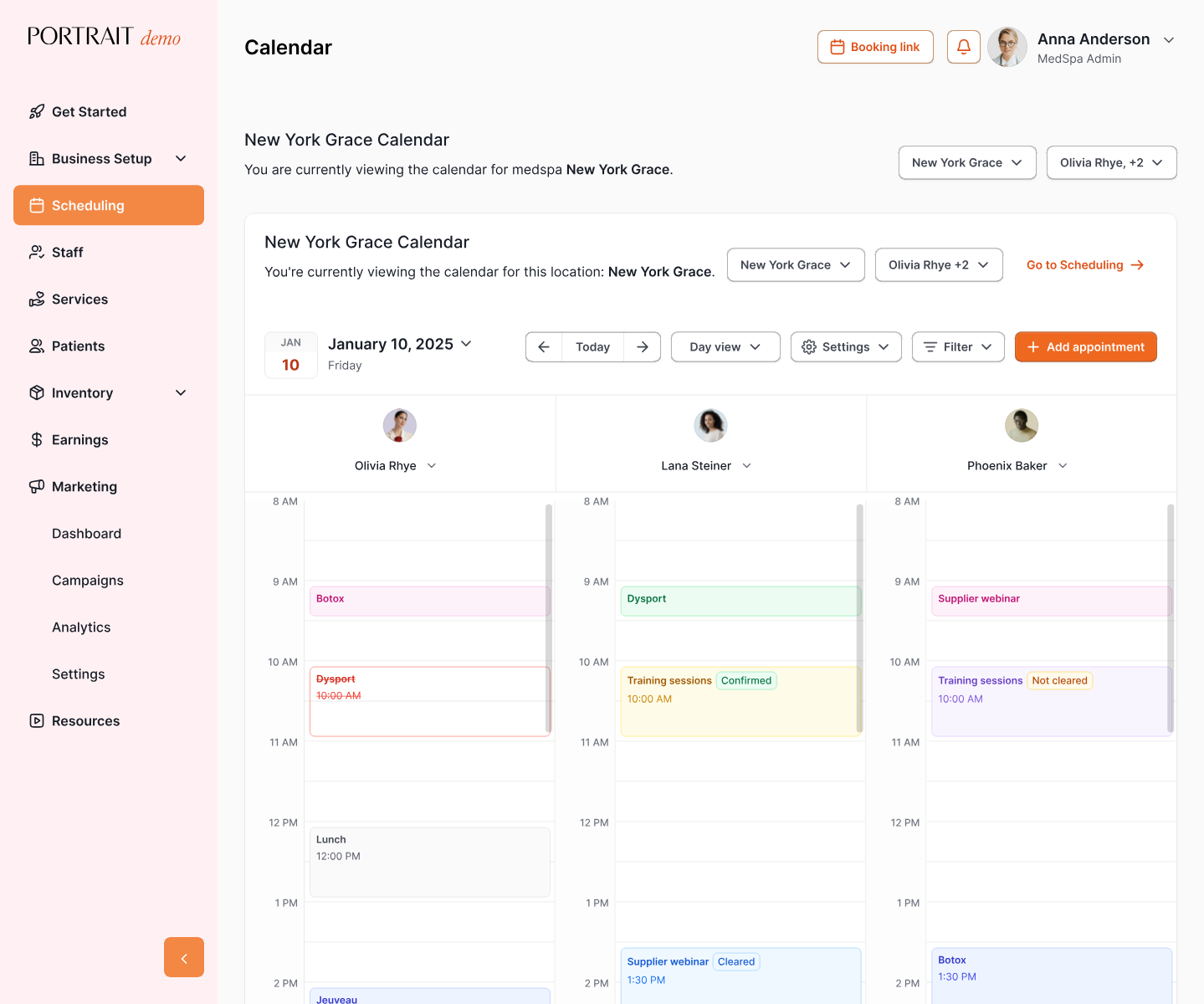


Stay Connected with Portrait Care
Subscribe to our email list and receive the latest insights, updates, and exclusive content delivered straight to your inbox.